Planning to avoid sinking
We have holes to fill and bilge pumps to fit

Onto another job that has been pending for a long time and is essential before we launch.
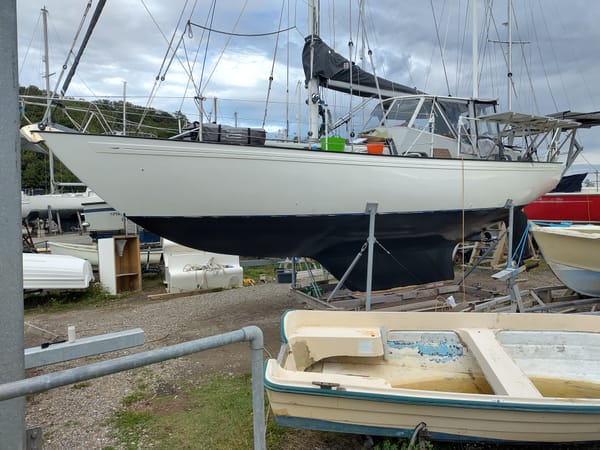
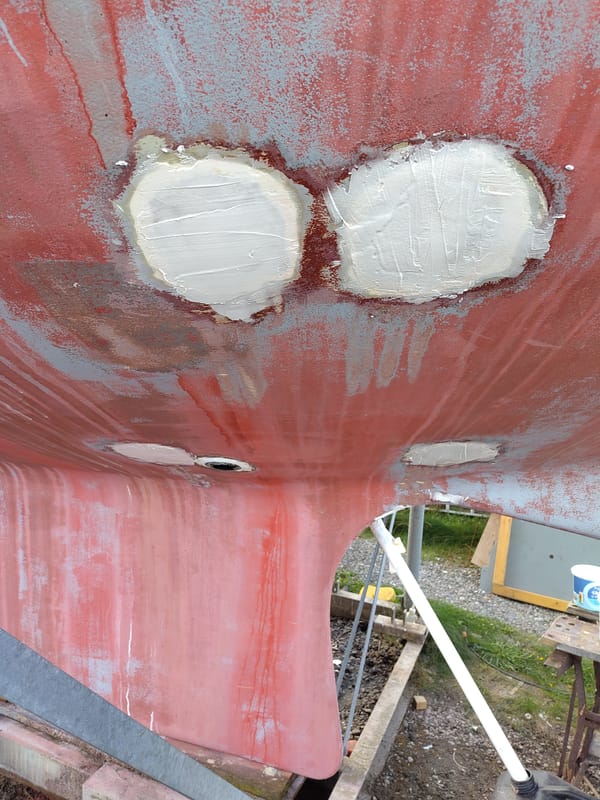
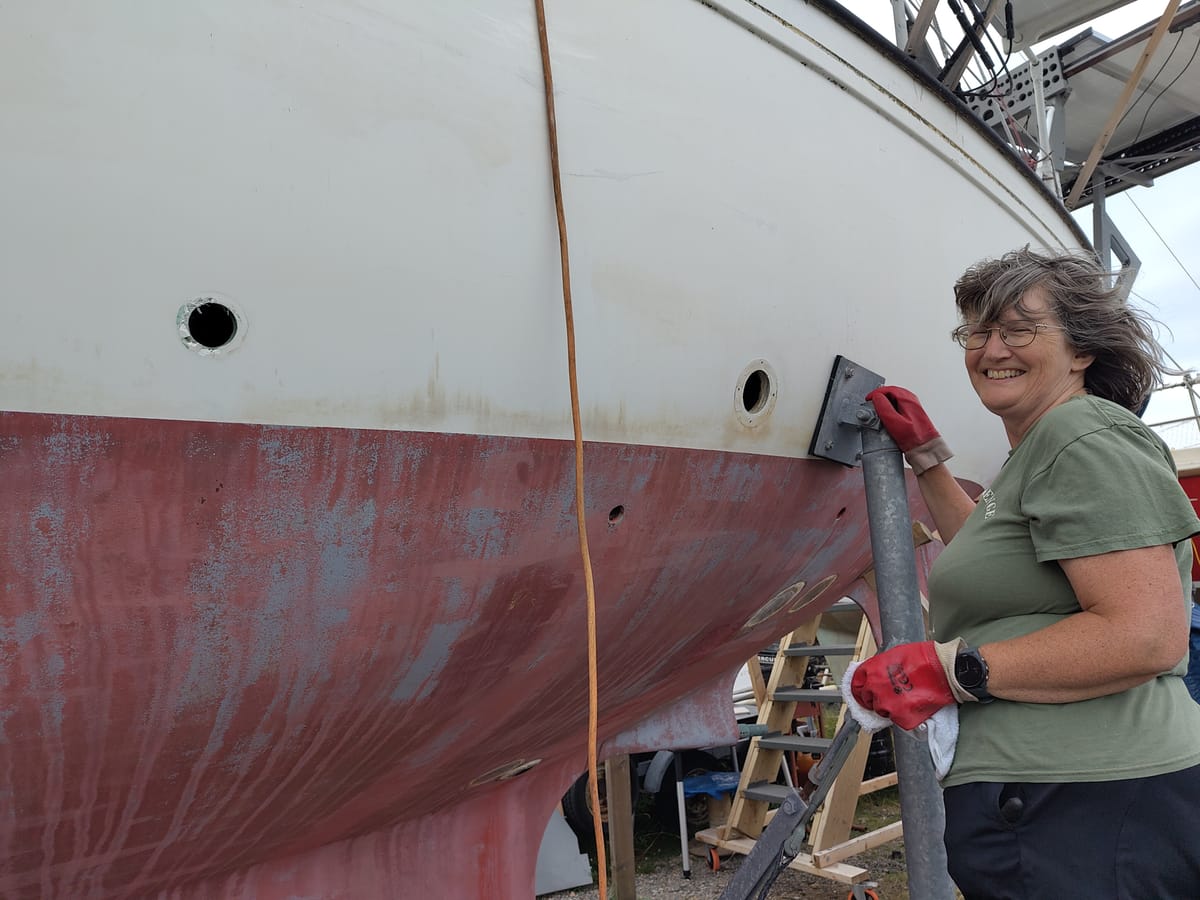
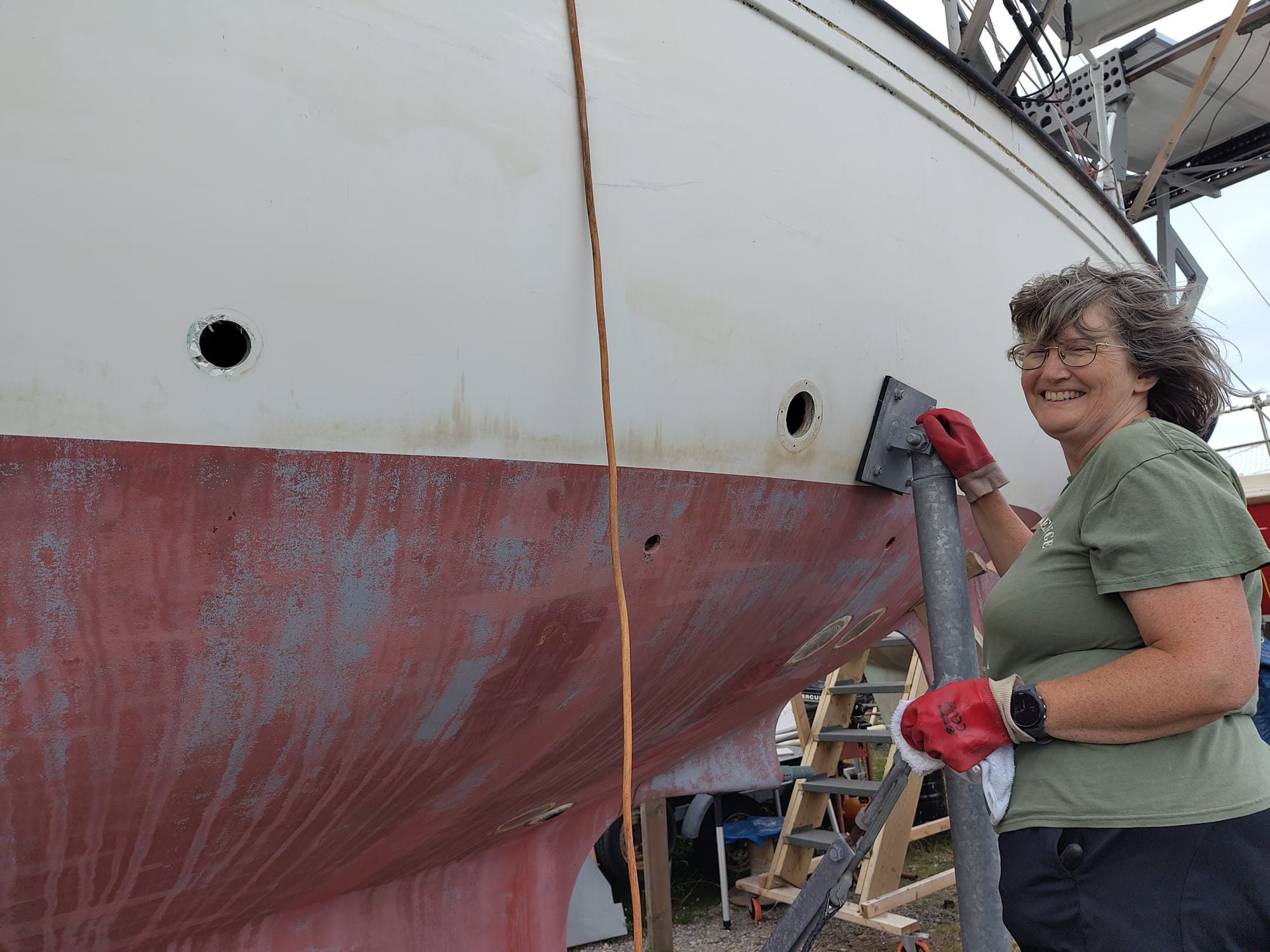
We have two big holes in the side of the boat! One is from the old diesel engine exhaust (the one by Jane in this picture). It is huge! 3 inches in diameter. The other is from the old manual bilge pump (the boat only had one pump) and is 2 inches in diameter. You can see that they are both a little above the waterline (when the boat isn't heeled).
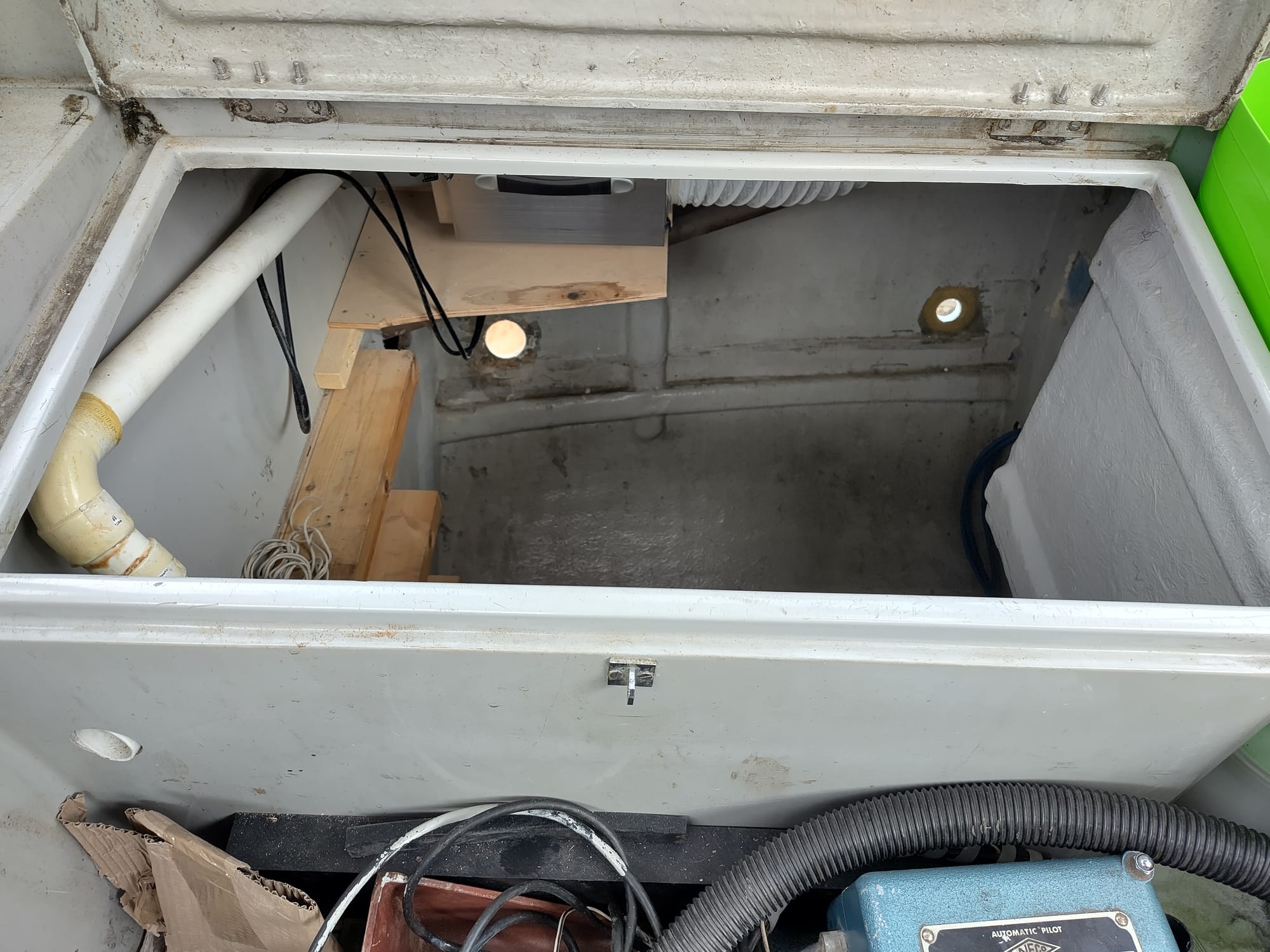
This is what the holes look like from the cockpit with the cockpit locker lid open (left is the 3" hole).
As we need to fit several bilge pumps we thought we were going to be able to reuse the same holes.
Unfortunately, it is not so simple 😦
Getting a skin fitting for a 3 inch hole is very difficult (and we have not found one in white so it would look horrible). Anyway 3 inches is a huge hole and far larger than we need. Also getting hoses and adapters to connect bilge pumps (the largest we will have uses a 1.5 inch pipe) is very difficult.
The next plan was to fill-in the bigger hole and then re-drill it to 2" (50mm). We could then fit the readily available 2 inch fittings in both (yuck, now I'm going to switch to proper, metric units). We can buy 50mm (2") skin fittings in white, but reducers from 50mm down to 38mm (1.5") are again difficult to find. We would still have two very large holes that would be much larger than our pumps would need, which is a bad thing, increasing the risk of sinking quickly if there is every a problem with the skin fittings or hoses.
Then there is the detail of what pumps we are going to fit and connect to the holes. Again it gets very complicated. We have now worked out that we need to fit 6 electric bilge pumps and 1 manual bilge pump! The manual pump is a legal requirement, the others are as follows:
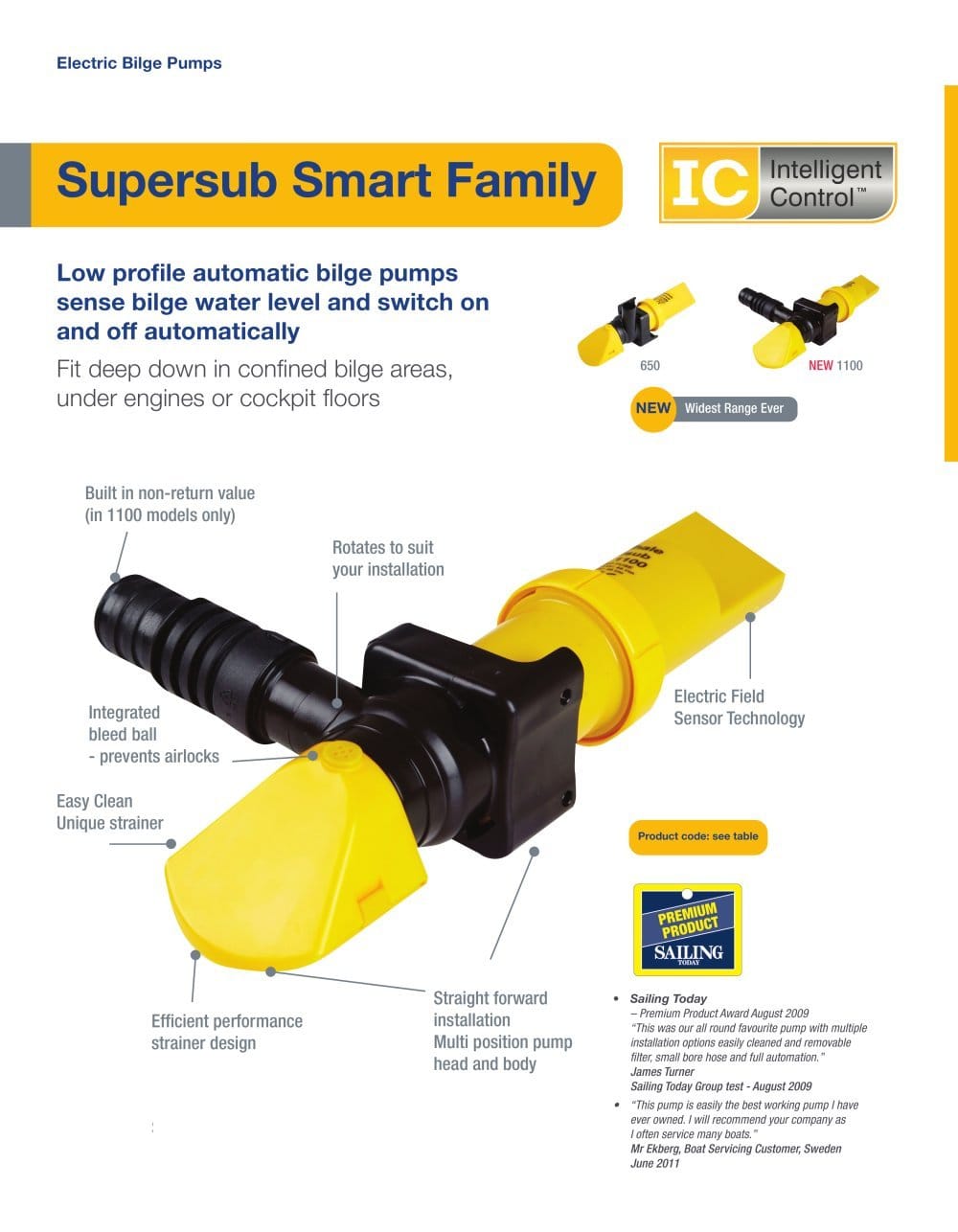
- Whale Supersub 650 in the bottom of the chain locker (this will exit via a different hole which already exists behind our washing machine storage in the forward heads - it was for the old shower pump). This pump has a sensor and so will start and stop automatically. Capacity 34 litres per minute.
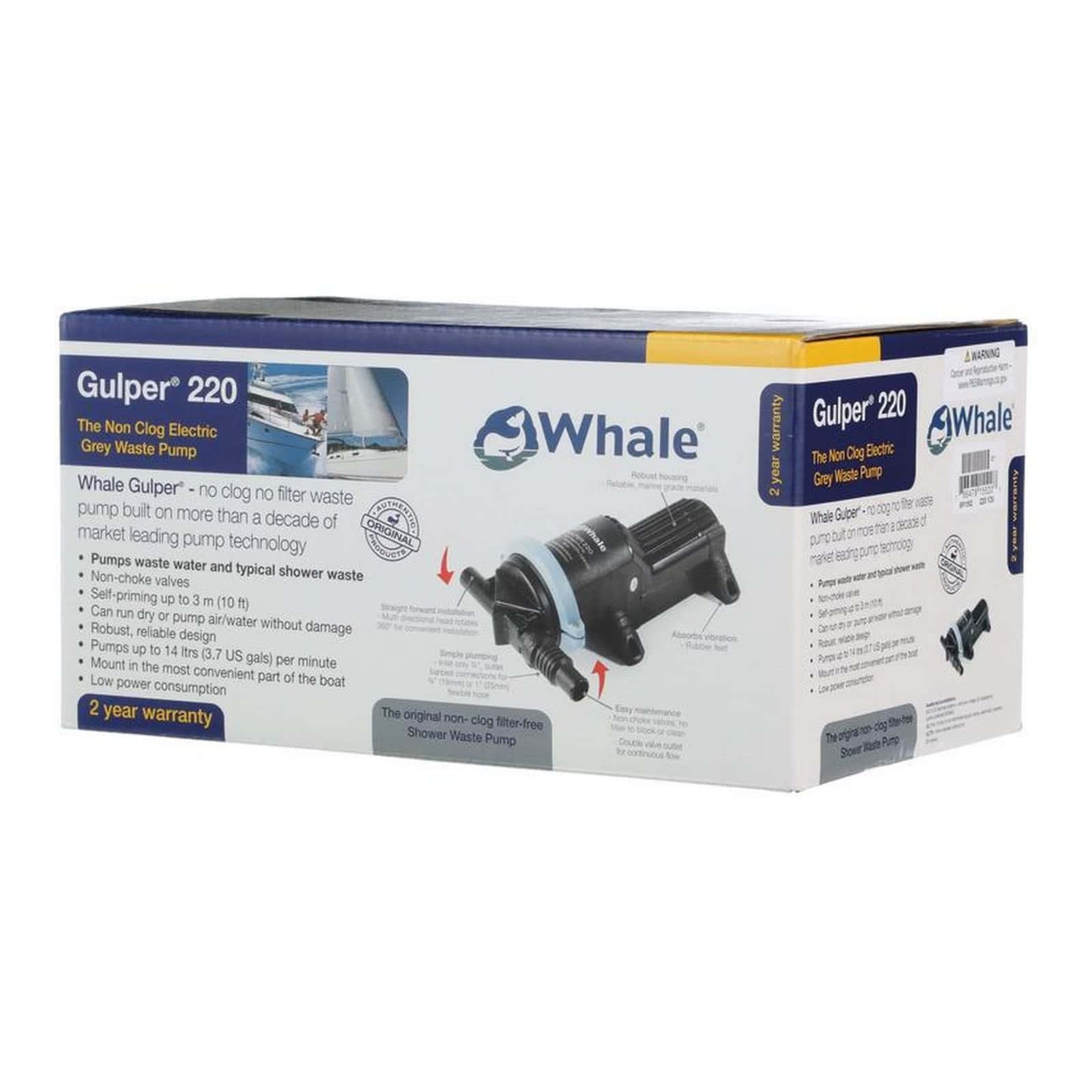
- Whale Gulper 220 to drain the shower and washbasin from the forward heads. This isn't strictly setup as a bilge pump as it will pump water into the waste (grey) water tank. We need to add a sensor to this. Capacity 14 litres per minute.
- Another Whale Supersub 650 in the bottom of our battery boxes. With all the boxing in of our batteries this should ensure that our batteries don't flood until the water has risen well above floor level. Capacity 34 litres per minute.
- Yet another Whale Supersub 650 inside the coffer dam area where all the holes below the water line are (with the exception of the rudder tube). That's the stern tube for the propeller shaft (fitted with a dripless seal), the two cockpit drains (fitted with 50mm TruDesign composite seacocks) and the only salt water inlet (fitted with a 32mm TruDesign composite seacock, that will be used for a watermaker, salt water to the galley and a deck wash pump). So if any one of these starts to leak a little the pump alarm will alert us and should ensure that the water does not flood further. Capacity 34 litres per minute.
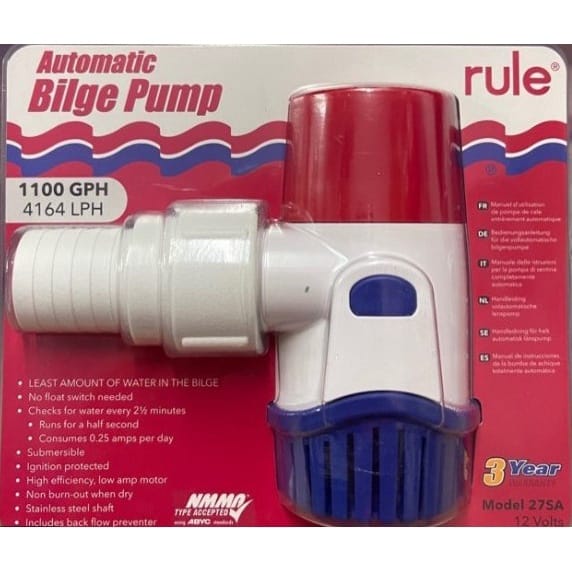
- Our main electric bilge pump in the sump under the electric motor. This will be a Rule automatic 1100gph pump (and it will be the only one powered directly by the main 48v battery bank). In real units that is 69 litres per minute.
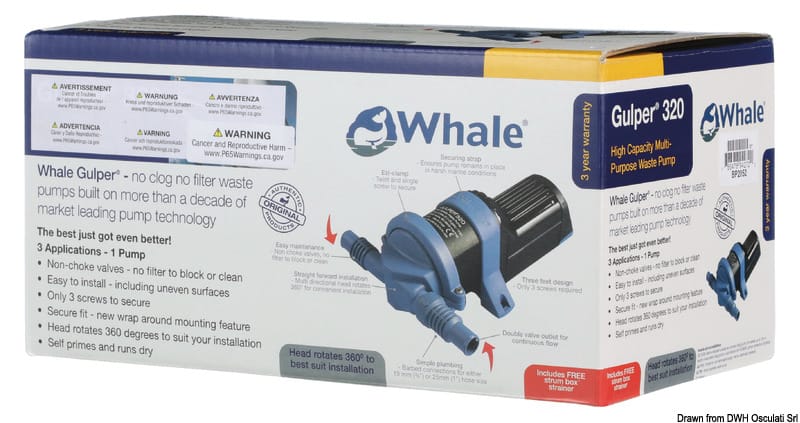
- A dual purpose Whale gulper 330. It will have a Y-Valve that by default connects it to the bilge with an automatic float switch to turn it on. When we need to empty the grey water tank (just water from the sinks and shower) we can turn the valve and press the manual on switch. Capacity 19 litres per minute.
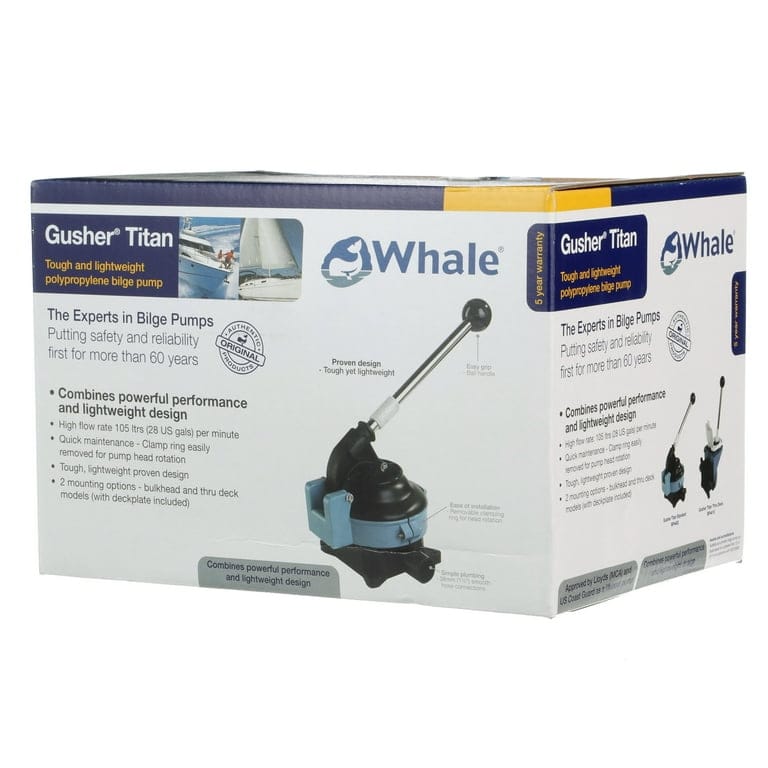
Our manual bilge pump is a Whale Gusher Titan, you can pump this while at the steering wheel. Capacity 67 litres per minute.
In total then, if water is pouring in we can theoretically pump 257 litres of water per minute out of the boat (15,420 litres per hour). In traditional measurements that is 3390 UK Gallons per hour or 4070 US Gallons per hour. The reality is that we could pump far less than this:
- the pumps are collecting water from different places. For example if there is a leak in the front of the boat only the chain locker pump will be able to do anything (because we have a watertight bulkhead between the forward cabin and the heads to contain the leak).
- Pump efficiency is reduced by bends in the pipework (we guess around 20% in our situation).
- Pump efficiency is reduced by the height they need to lift the water (very pessimistically say another 20%).
- The water has to make it's way from the leak to where the pumps are, if we are rolling and pitching a lot then until there is a whole lot of water in the boat the pumps will probably operate a bit intermittently.
Still compare this to the original manual pump (lower capacity than ours), at about 50 litres per minute.
We are going to share the connections for the electric pumps 3 to 6 and the manual bilge pump between two 38mm skin fittings which we will put in the same place as the current holes (after they have been filled and re-drilled). All the pumps will have loops of hose that go right up to the underside of the deck and anti-siphon loops at the highest point. They all also have choke valves (which should stop water running into the boat).
By the way we also have a slightly smaller loose manual bilge pump with hoses that we can take to anywhere in the boat (or someone else’s boat) that we want to pump out.
Most of the fittings and pumps are now ordered. Next job is to do the grinding preparation to fill the two big old holes. Then we need to do the fibre-glassing, and drilling so we can permanently install the two 38mm skin fittings.
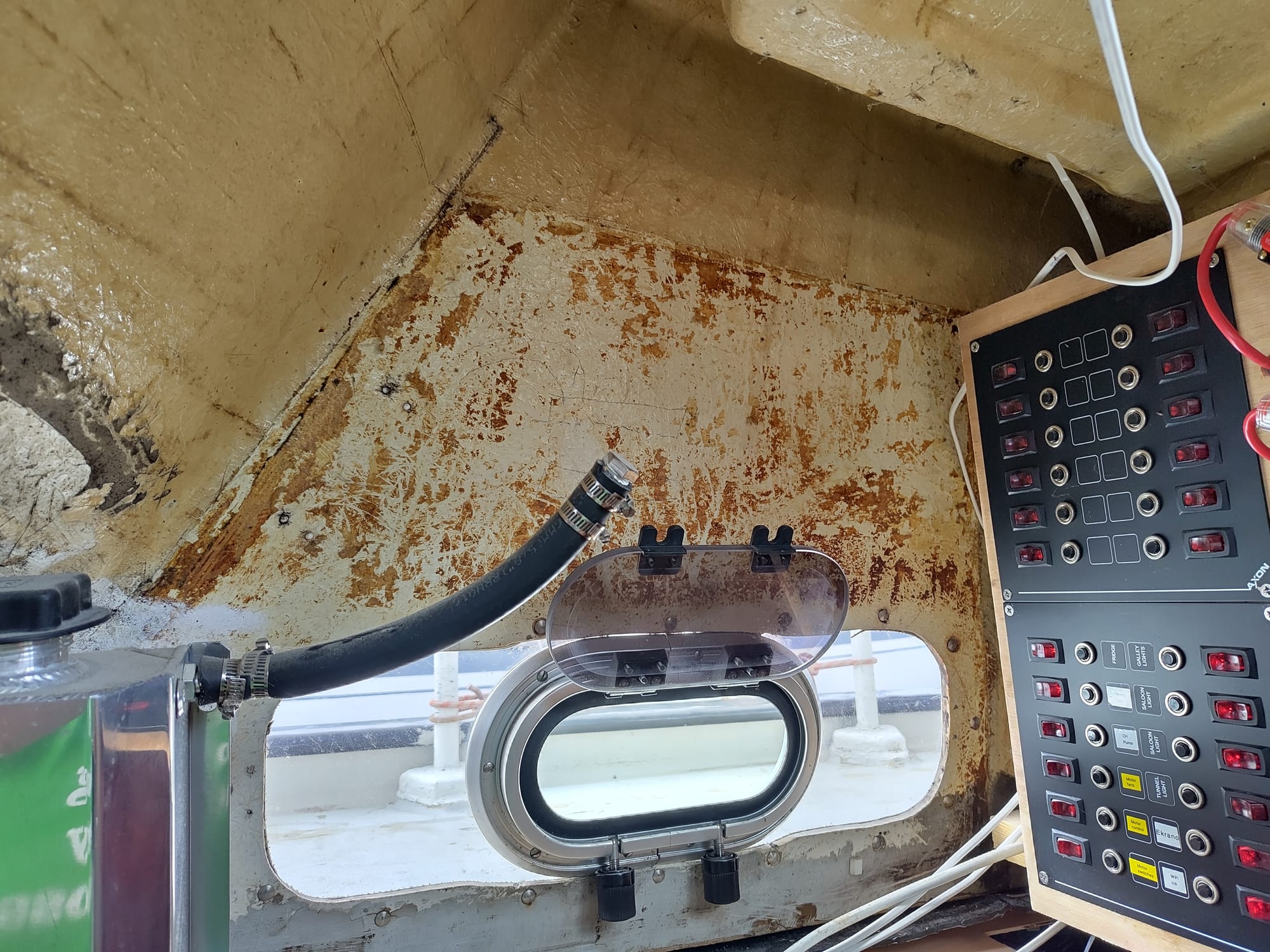
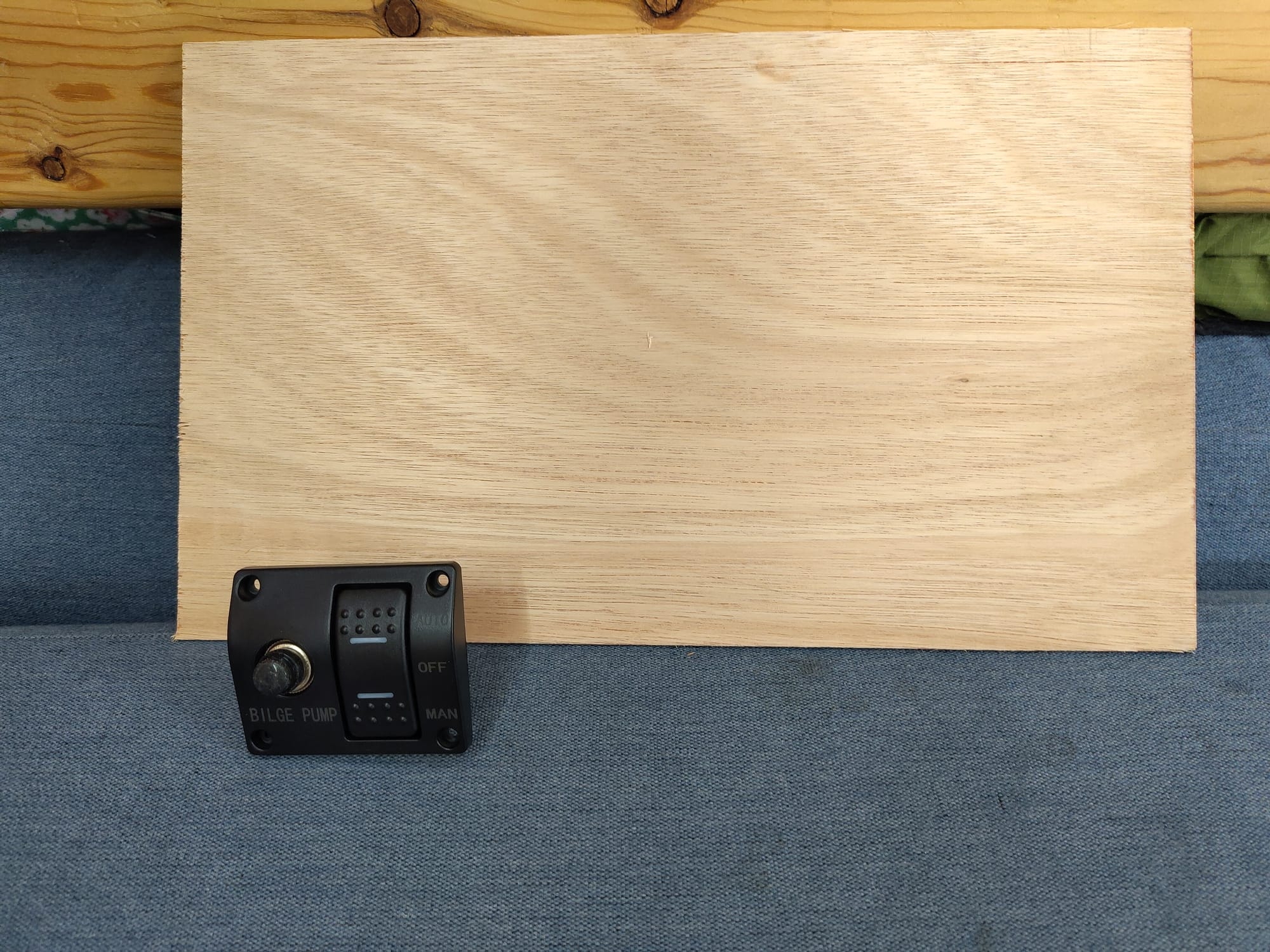
I'm going to build a dedicated "control" board for all 6 of the automatic bilge pumps. I'm thinking of mounting it on the cabin side above this window (this keeps all the electrical connections as far from water as possible)
6 of these switches to go on this board with bus bars behind.
These are the different pumps that we have:
Hopefully real progress to report soon.