Newsletter 27th July 2026
Mast news and so much else

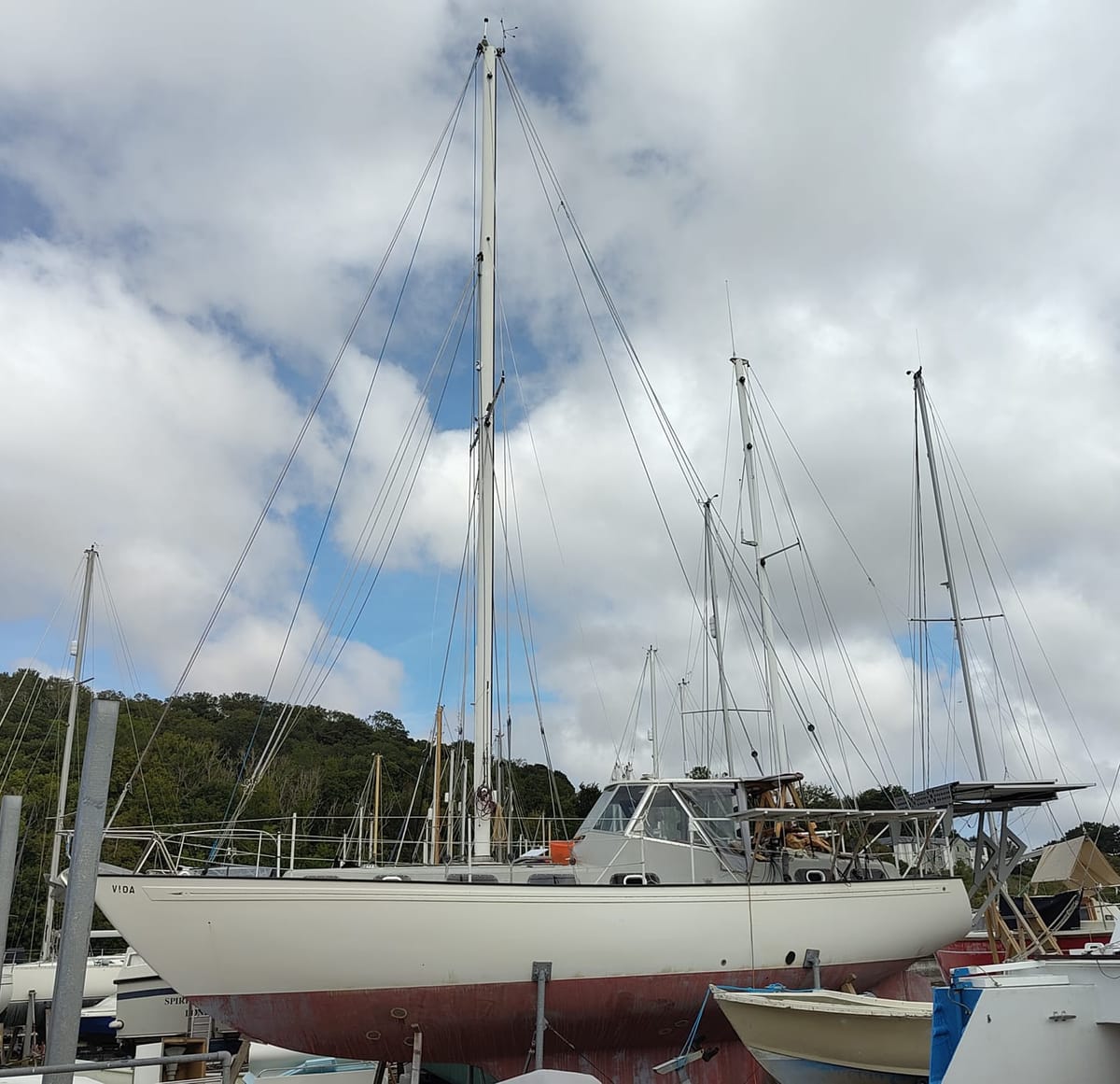
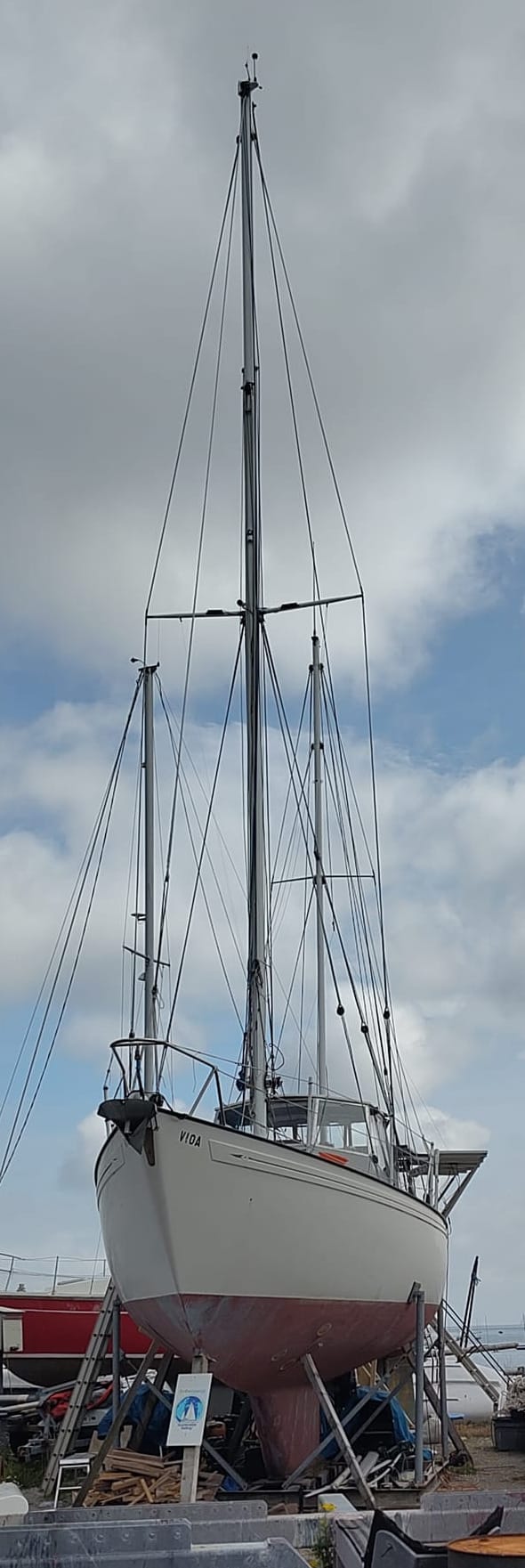
We have has a crazy few weeks which is why we failed with weekly newsletters. Beyond the huge, huge milestone of Finishing all the mast work and getting the mast up we have also been
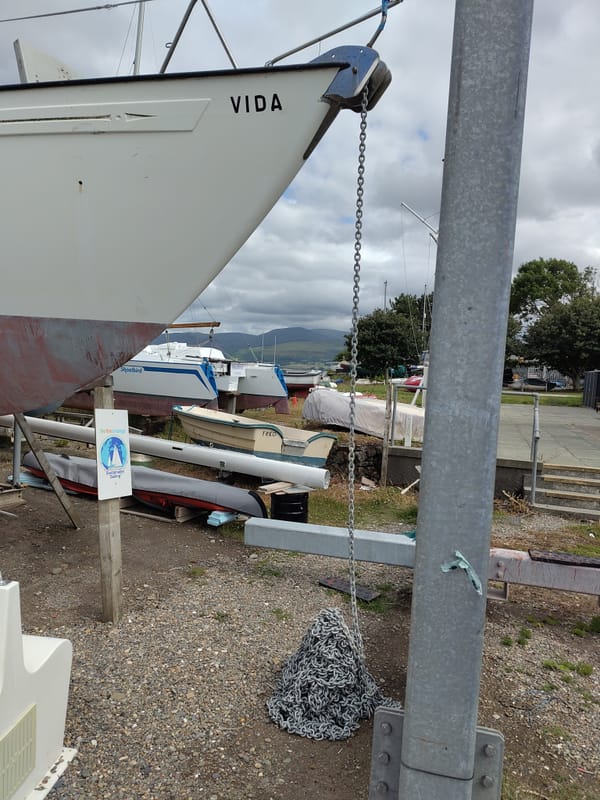
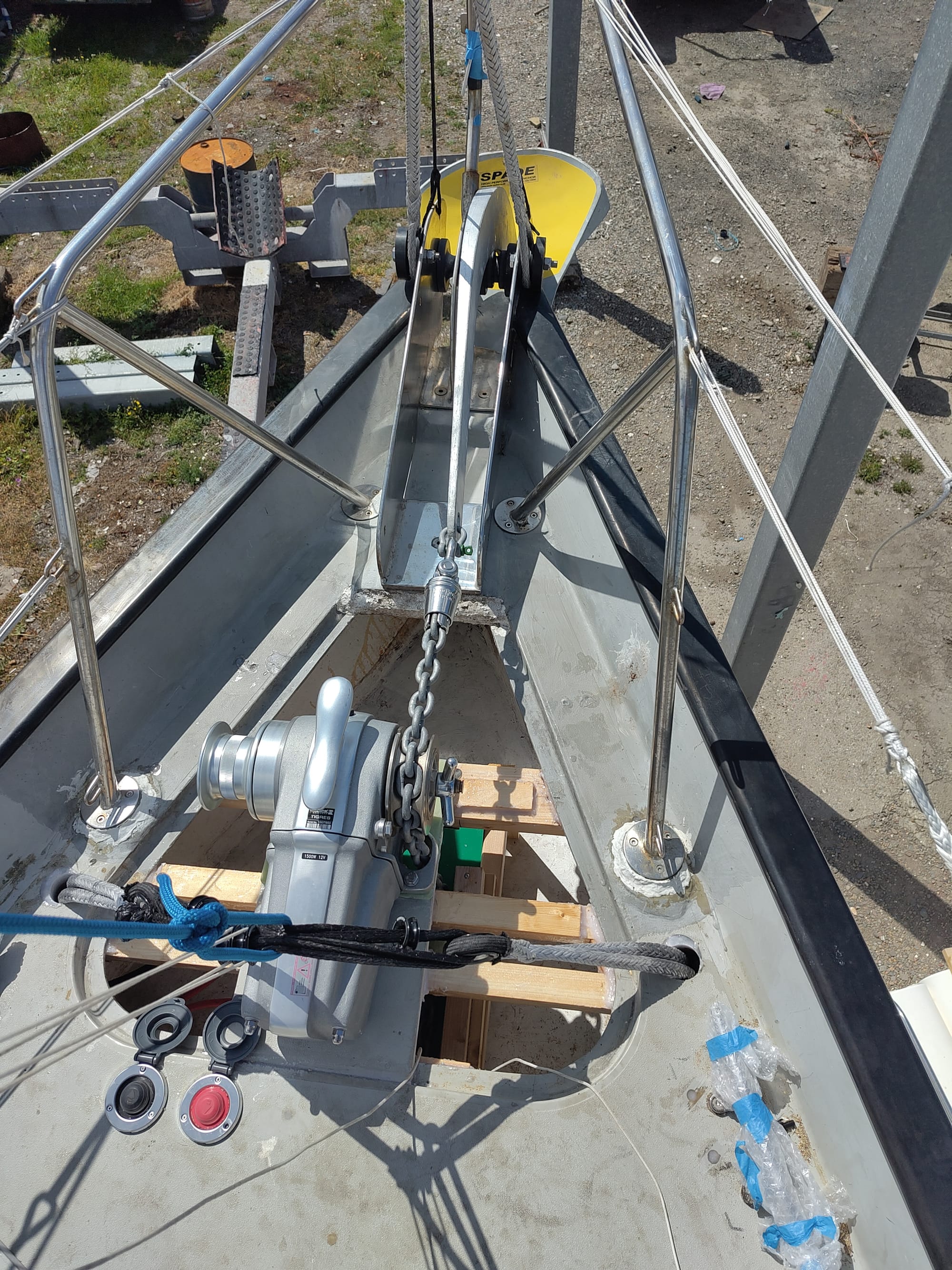
- finishing the windlass work
- preparing the bottom of the boat
- yet more electrical work
- enjoying Family celebrations
The Main Mast
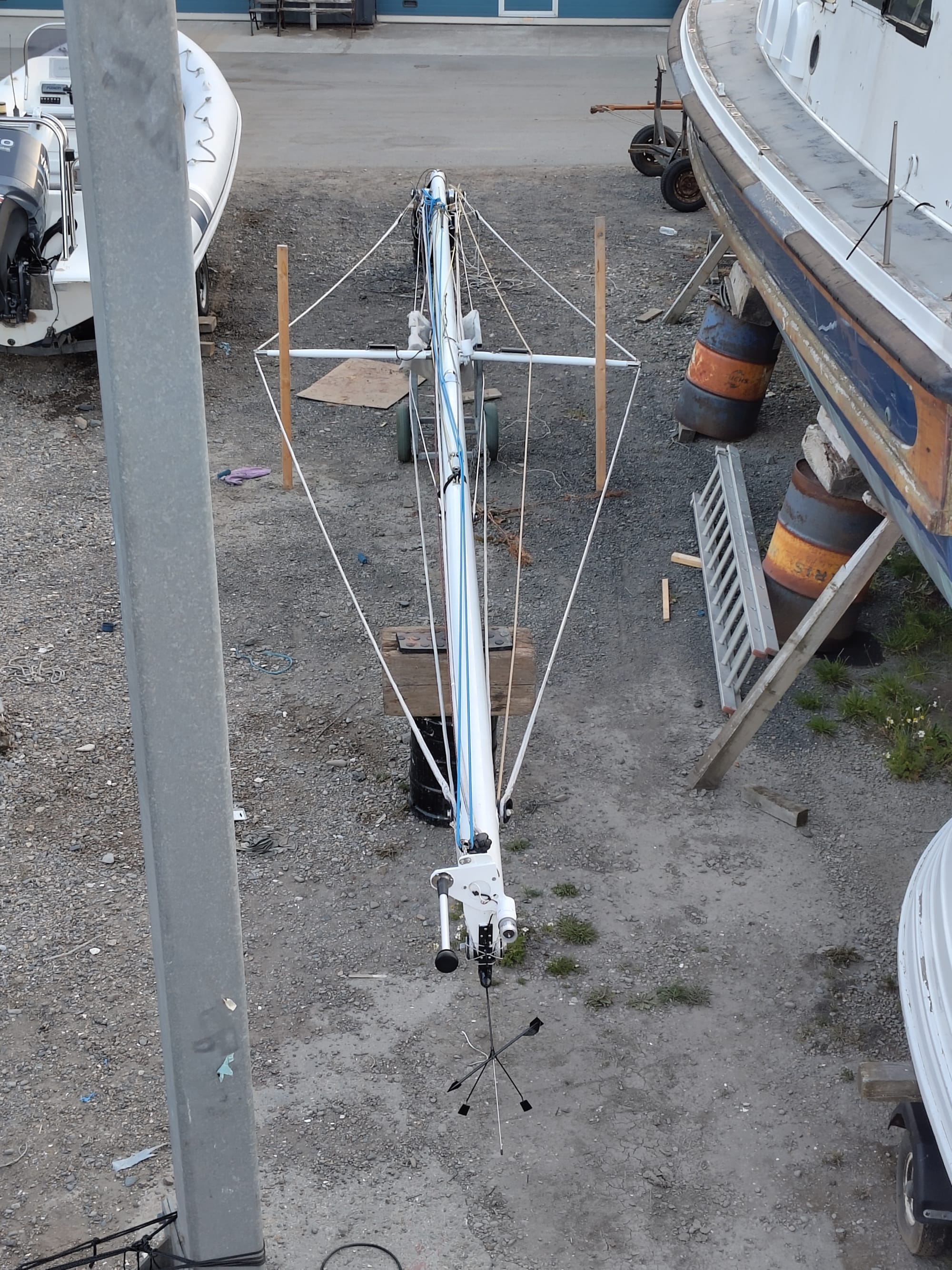
We have made so many changes that affect the mast that getting it ready for the crane (which we booked for our 38th Wedding Anniversary on 23rd July) was an enormous undertaking (mentally as well as physically). The only things that remain from what we bought are the basic aluminium tube and the pair of spreaders. Years ago now we stripped the mast back to a tube without any fittings and then we painted it (epoxy filler for holes and damage, lots of coats of primer, undercoat and two part top coat).
Then there are the big changes we have made to our whole rig which include a) switching from stainless steel wire rigging and bronze bolt chainplates to homemade Dyneema rope rigging and chainplates b) changing from a sloop (one large genoa foresail) to a cutter (a smaller Yankee instead of the genoa and a staysail between that and the mast).
As we prepared to put everything on the mast one of the surprises was that parts are no longer manufactured to fit our mast cross section. Newer masts are much smaller and thinner (which has also been reassuring when it comes to strength), they also lack the reinforcement stringers running up the inside that our mast has.
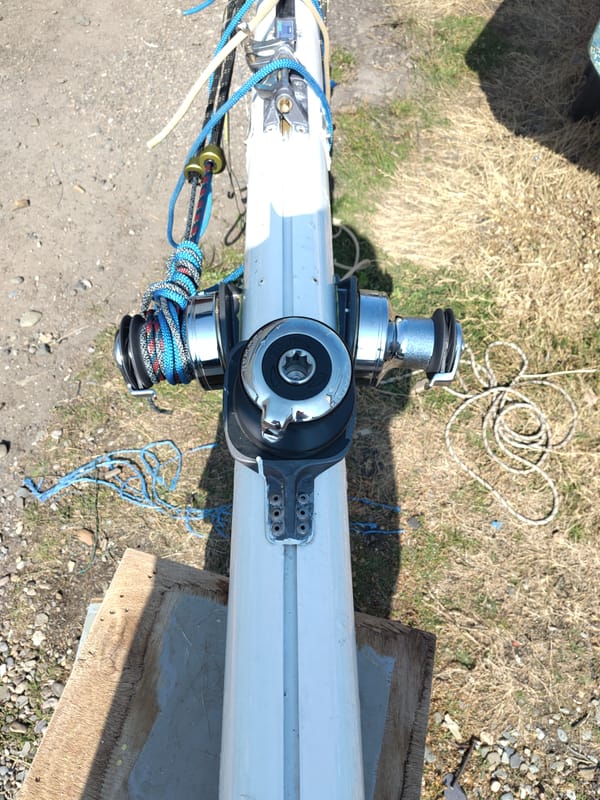
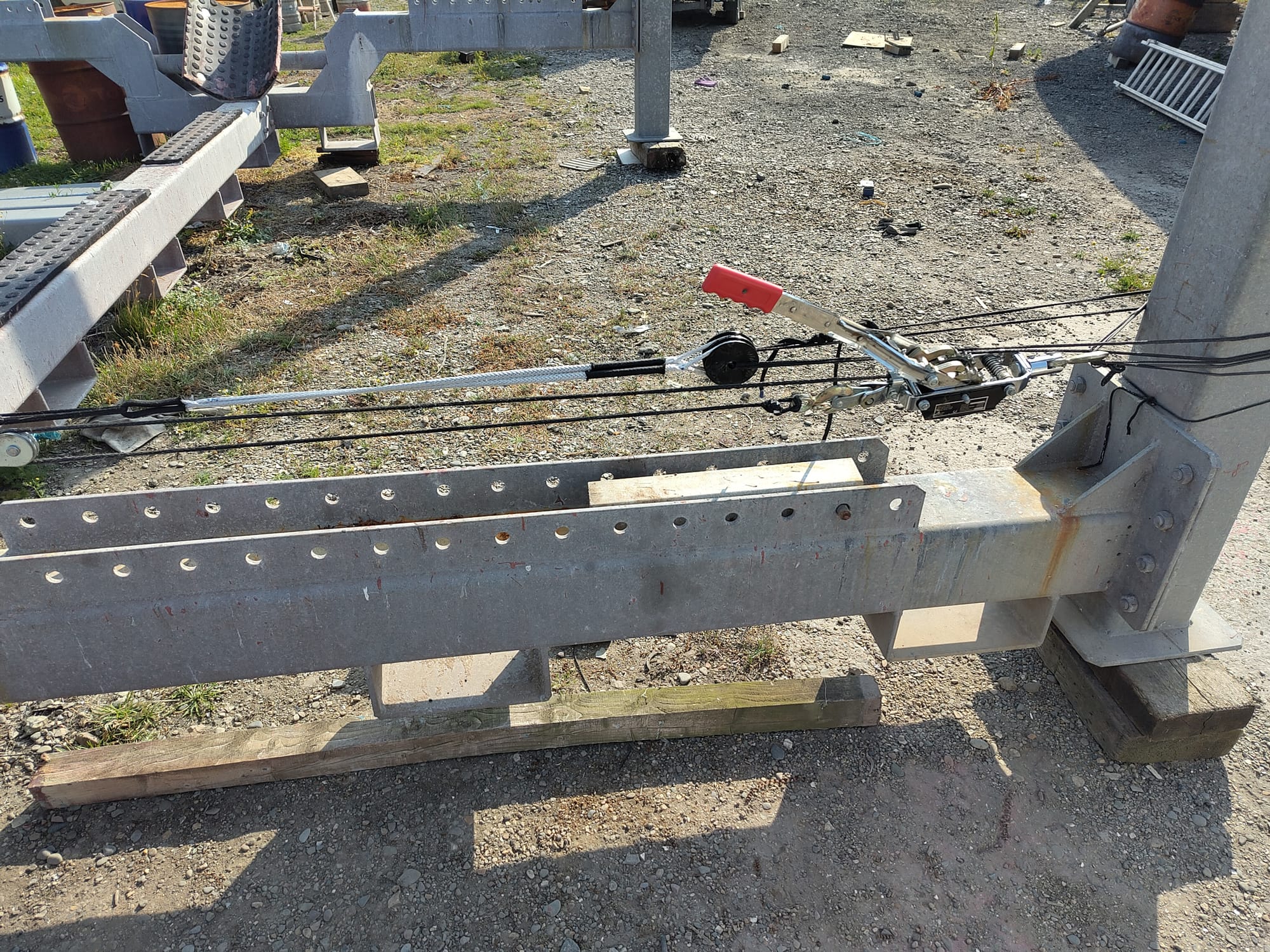
This had most impact when it came to adding the support for the cutter rig. Below is a picture of the "O-Fitting" that needed to be fitted into the front of the mast about 3/4 of the way up.
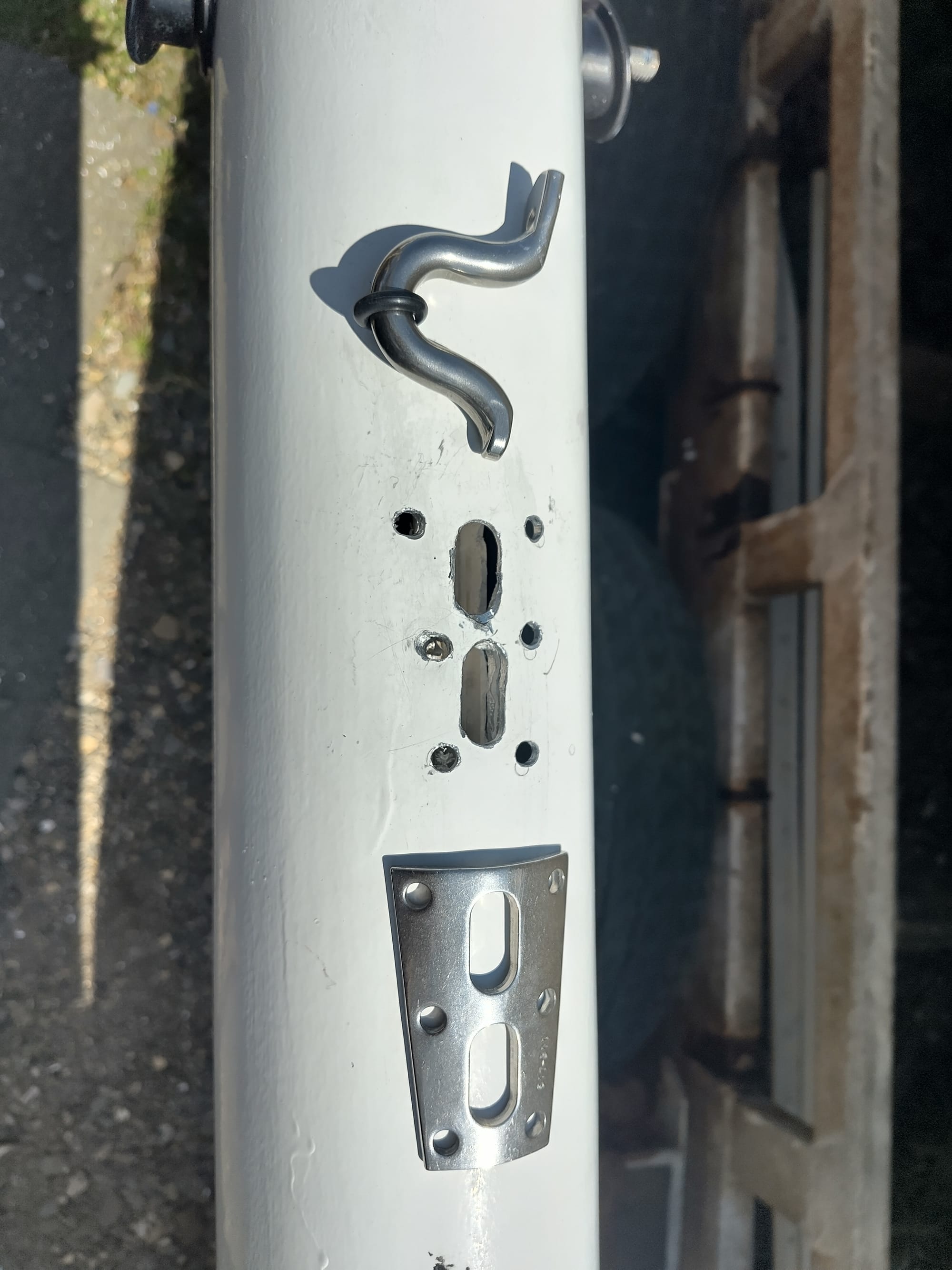
When we cut out the hole for the "loop" we had to cut into the conduit at the front of the mast that is for the wires for lights and vhf antenna. The Rivet holes also clashed with the stringers running up the inside of the mast. So we had to change our plans. We had intended to fit (and bought the parts for) a double sheave for the staysail and storm job halyards. This would have gone about 25cm below the O-fitting, and the halyards would have gone over the rotating sheaves from the outside of the mast to the inside, then down to where we would have cut new exits for them. However, we would have had to cut away all the conduit for wires and the stringers. That would have weakened the mast a lot and even then we couldn't work out how to get the wires past the sheave without the halyards rubbing them.
So now we have external halyards which is fine. They are a little less tidy looking and we need to pay a little more attention so they don't slap against the mast in the wind.
We had to fabricate ways to attach our Dyneema Rigging. For all the side shrouds (cap to the top of the mast, 2 lowers to under the spreaders and new checkstays above the O-Fitting to counteract the forces of the inner forestay) we splashed out and bought the expensive Colligo Marine Cheeky Tangs. They were easy to fit and are super strong.
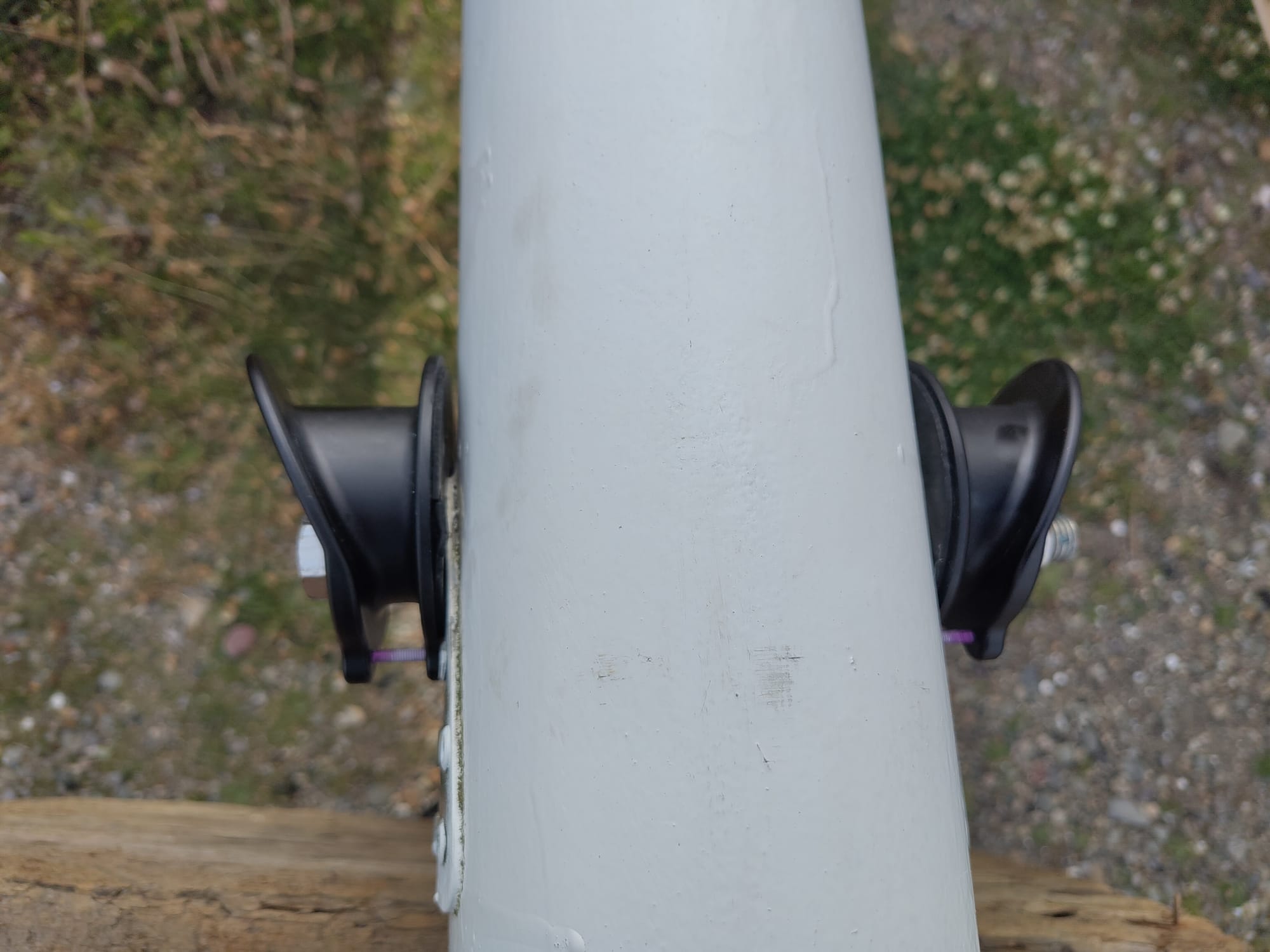
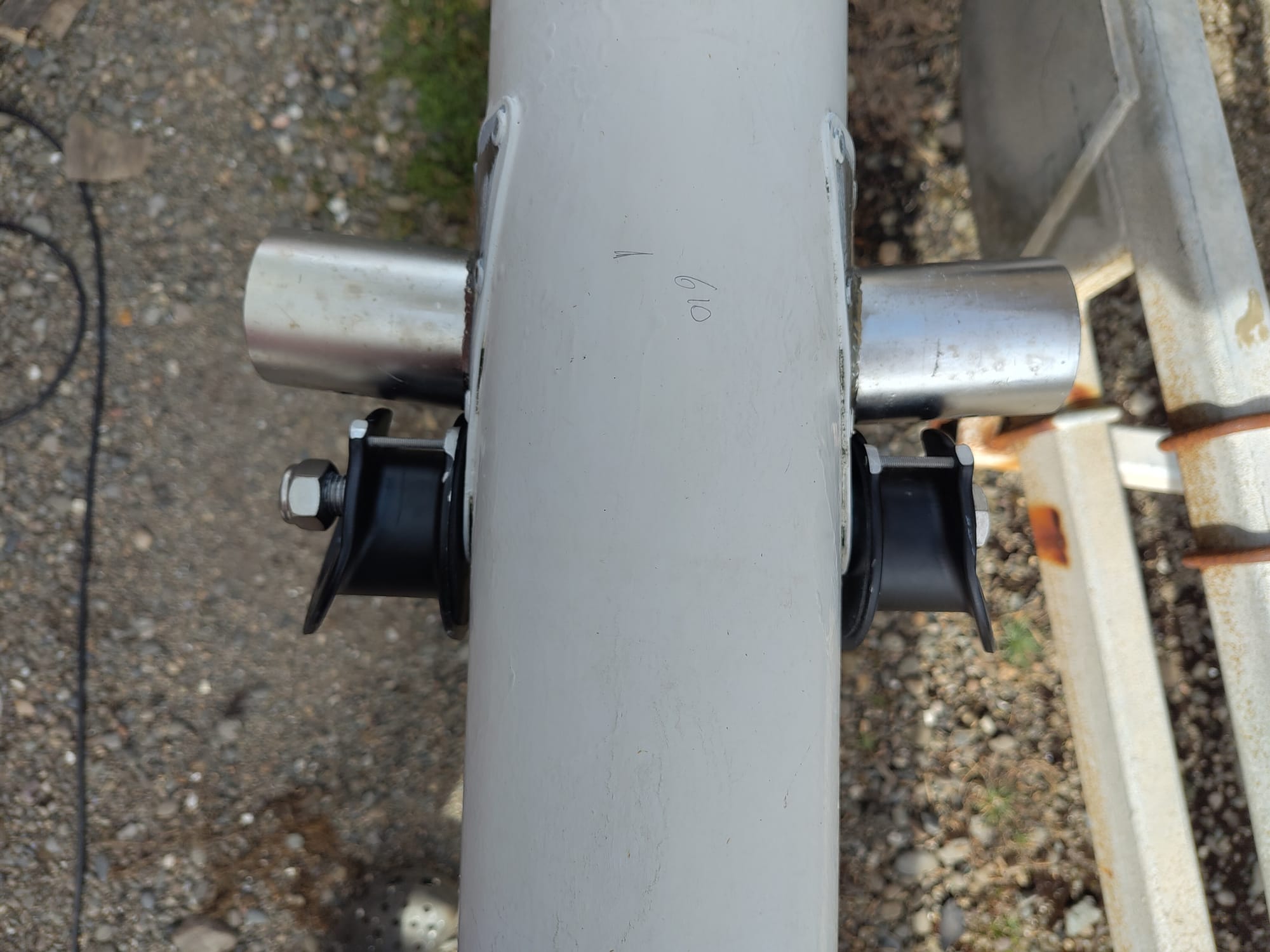
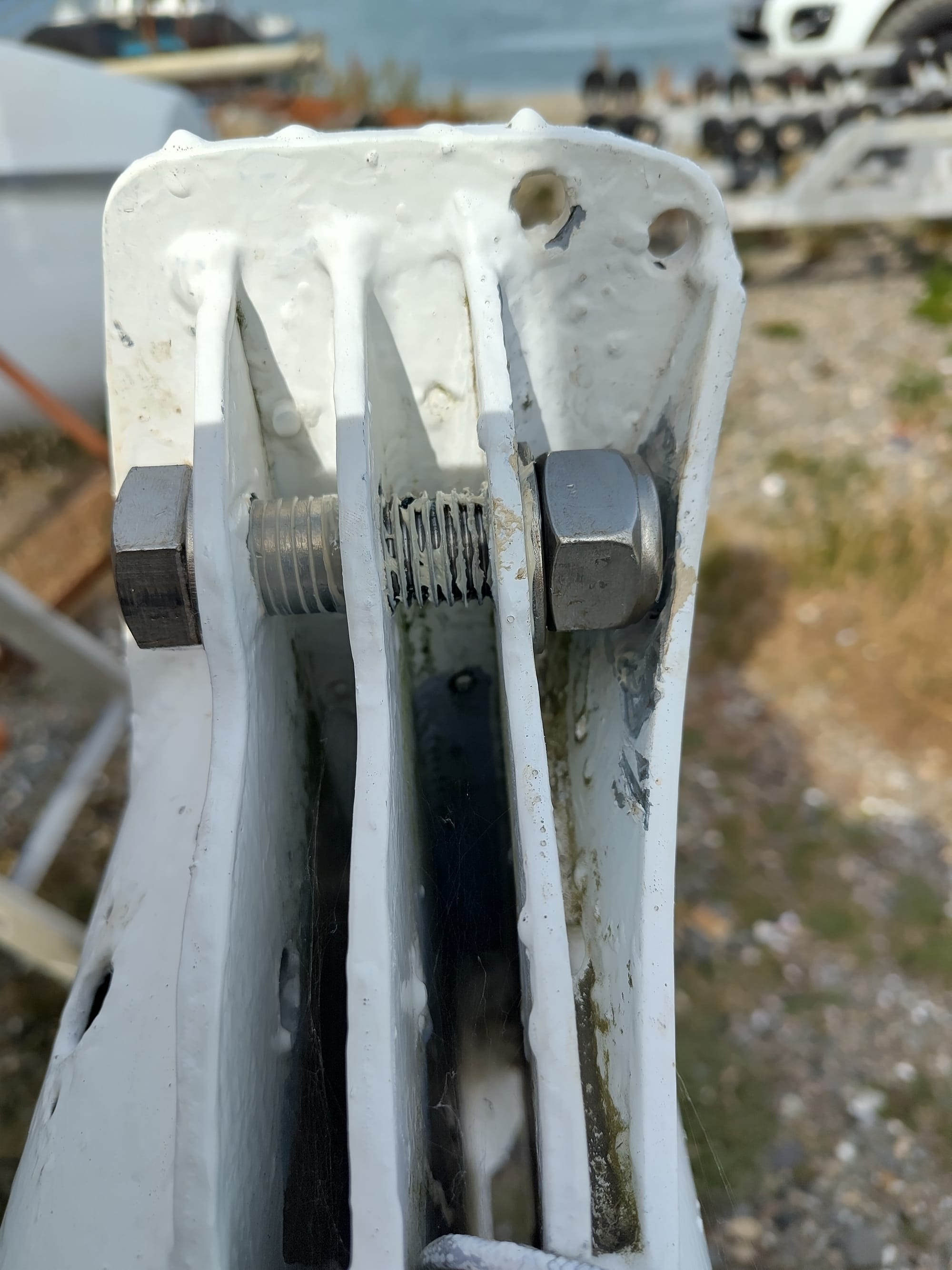
For the top of the mast we made fittings from Acetal and rather than hollow pins (that are different sizes to new masts) we fitted heavy but strong stainless steel bolts. (See this video about the shrouds)
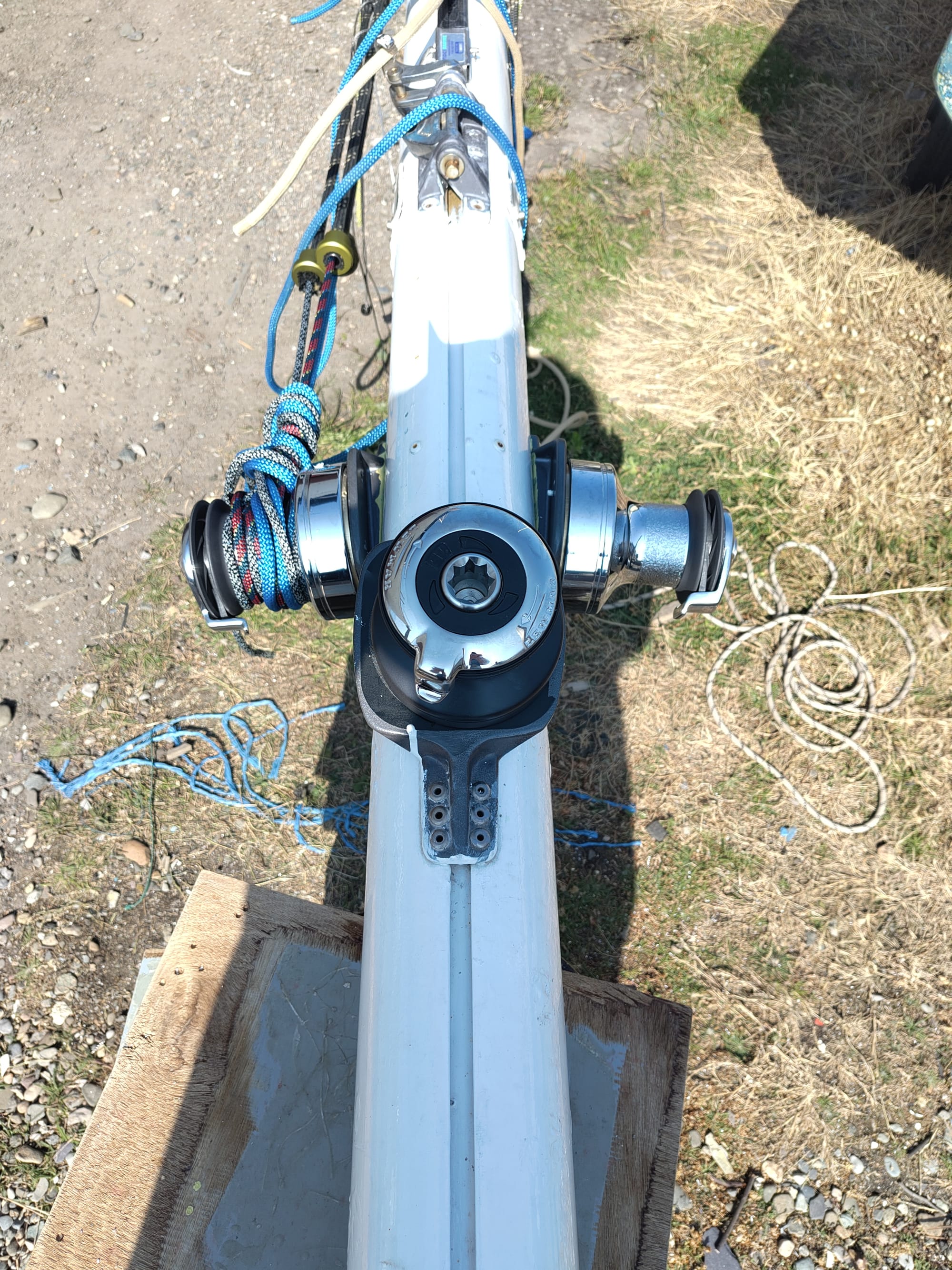
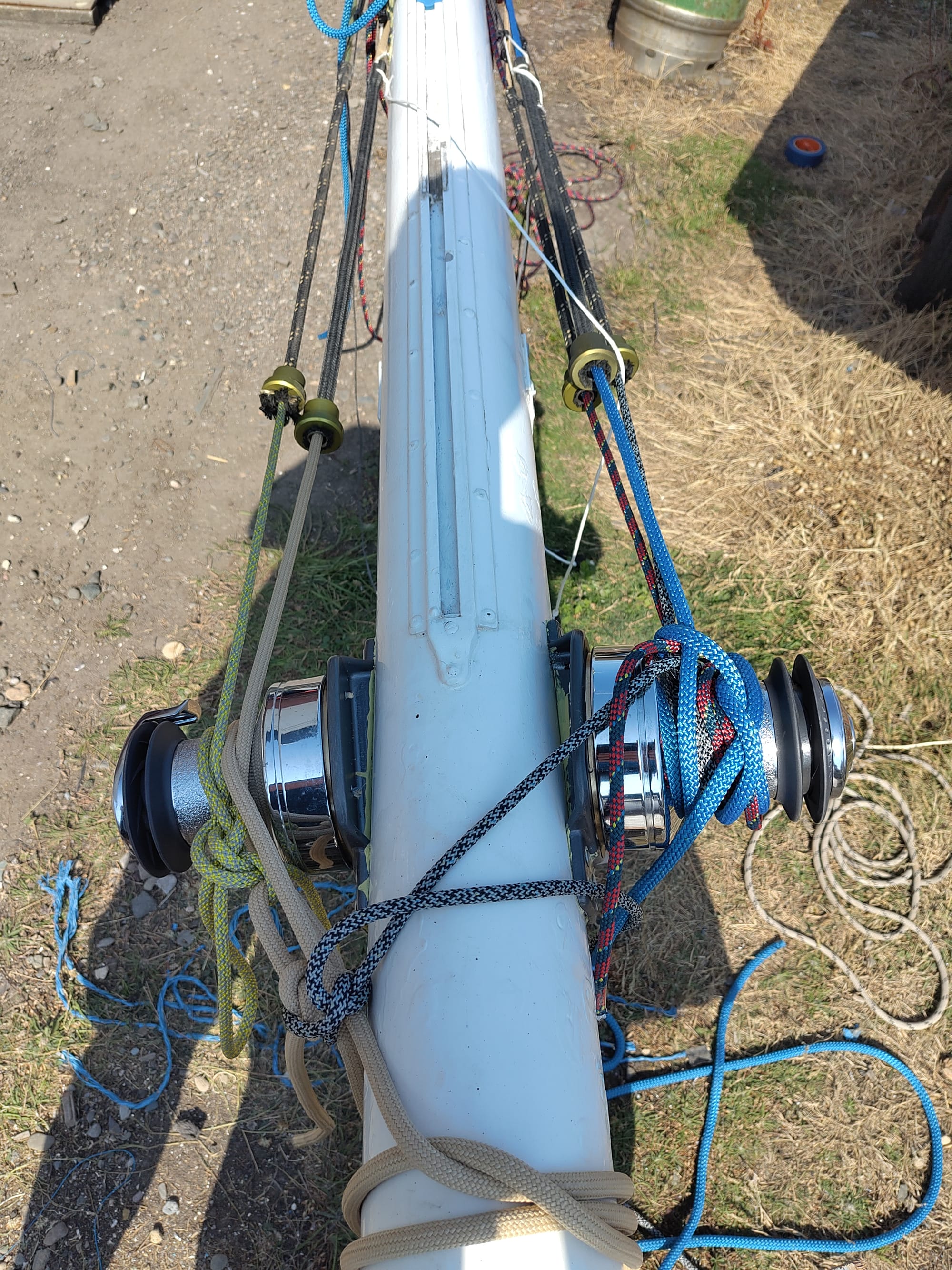
We fitted all new winches and pads for them. That required a new much heavier duty riveting tool and also meant I need to learn how to "tap" a thread for a bolt. The new halyard winches are a big upgrade from a size 10 and 8 to two size 30, also the new ones are "self-tailing" which means you don't need 4 hands (to hold and pull the end of the rope while winding the winch). We also added a size 16 self-tailing winch for the main sail reefing lines. (see this video for the fitting)
Another big change (although not yet finished) is that we have moved from cleats (that you wrap the halyard around) to the very latest technology which is constrictors. These are what grip the halyards to keep them tight when you have hoisted a sail. They are a fabric sleeve that grips the halyard like a Chinese finger trap, a light line is pulled to concertina the sleeve which releases the line, piece of elastic pulls it tight again. The key advantage is that they do no damage to the halyard they are holding. I still have to build the part that holds them in place.
The mast also has all new wiring and electrics. We have tried to do this in a way that is as reliable and simple as possible while giving us all we need.
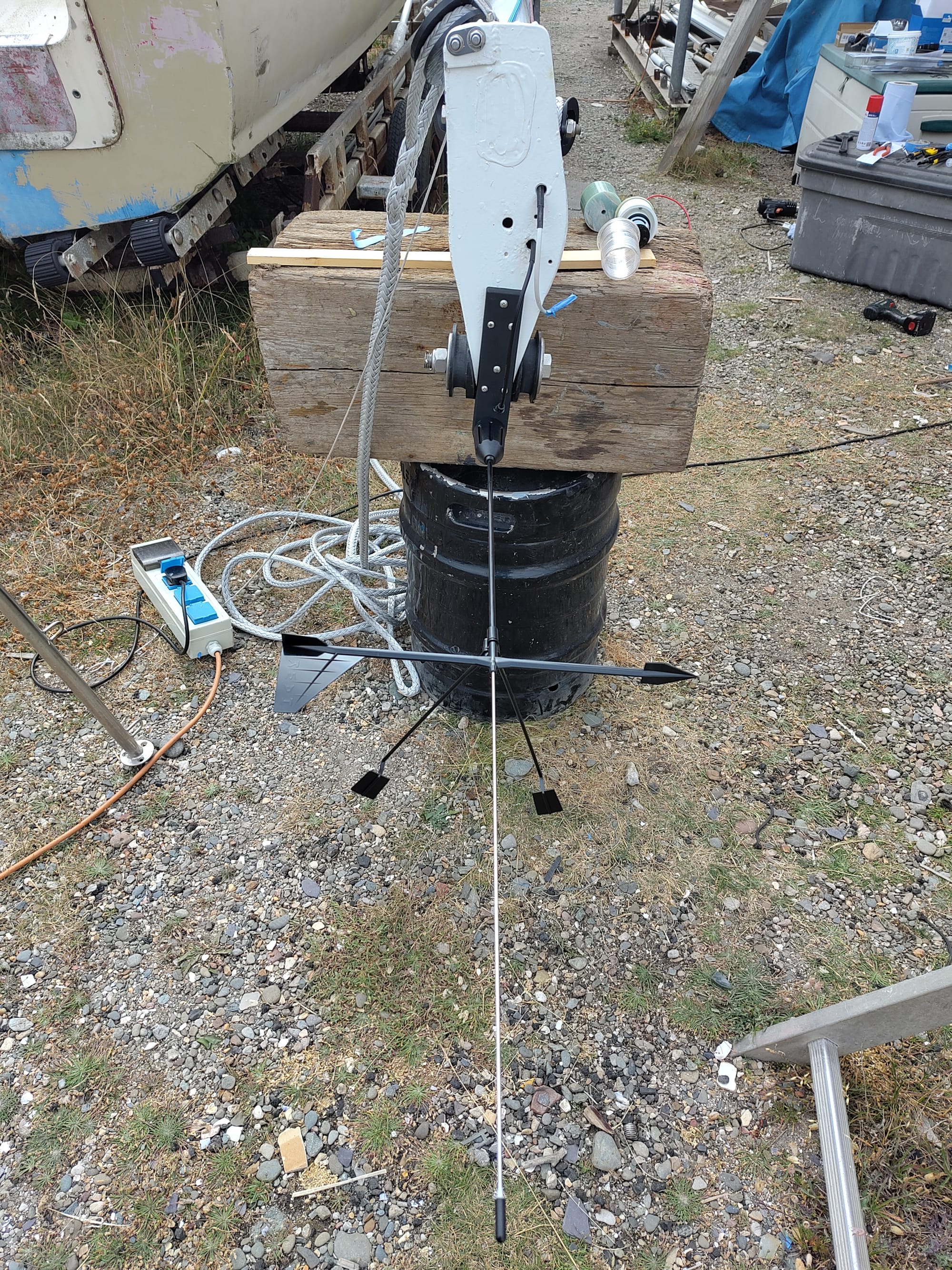
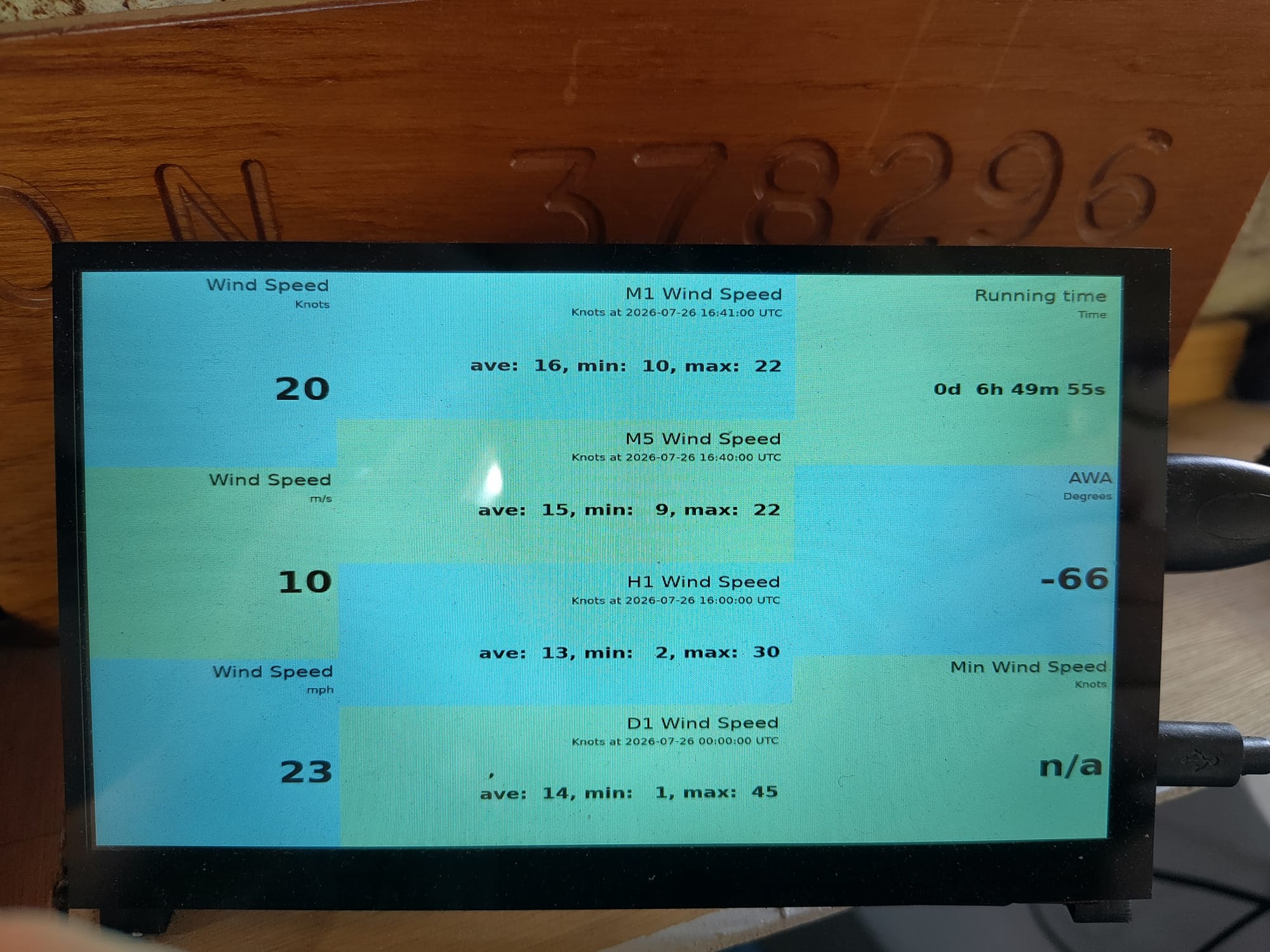
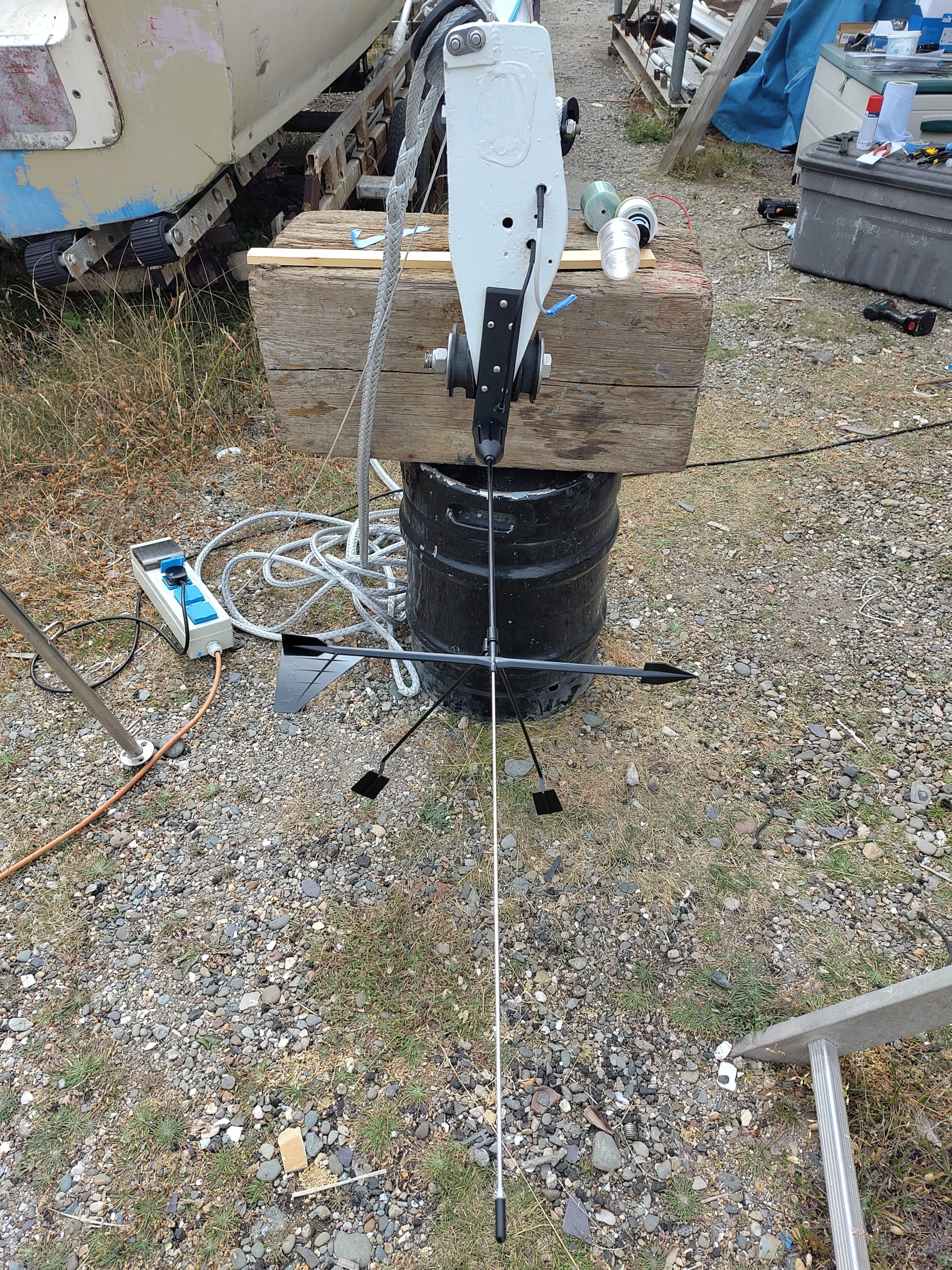
On top of the mast we have out Calypso wind instrument. This is solar powered and transmits wind speed and direction via Bluetooth. I don't like their phone app for showing this and didn't want to spend more on a device to translate it to the wired marine standard of NMEA2000. So I have been writing my own application in the Rust programming language to run on a tiny Raspberry Pi Zero. A long way to go but we have something useable now:
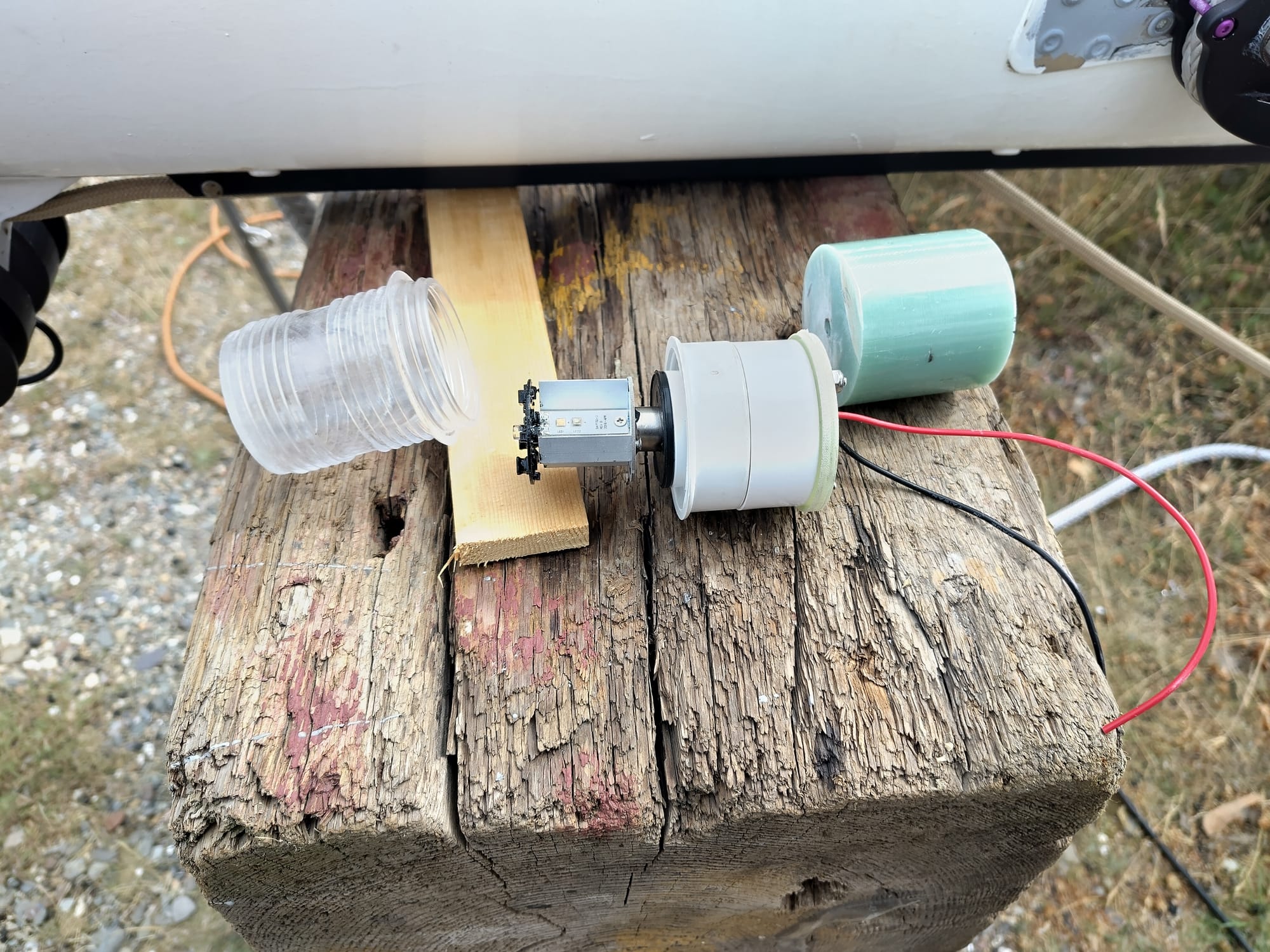
Also on top of the mast we have our VHF Radio antenna (for two way radio communication up to about 25miles) and a navigation light. Our light is unusual, it only uses 2 wires but has 3 modes: light activated all round white anchor light, Tricolour (for sailing at light showing green to starboard, red to port and white to behind) and a flashing SOS mode. So only two wires going all the way down the mast. We had to fabricate a special mount to fit them all and ensure that the light was blocked as little as possible.
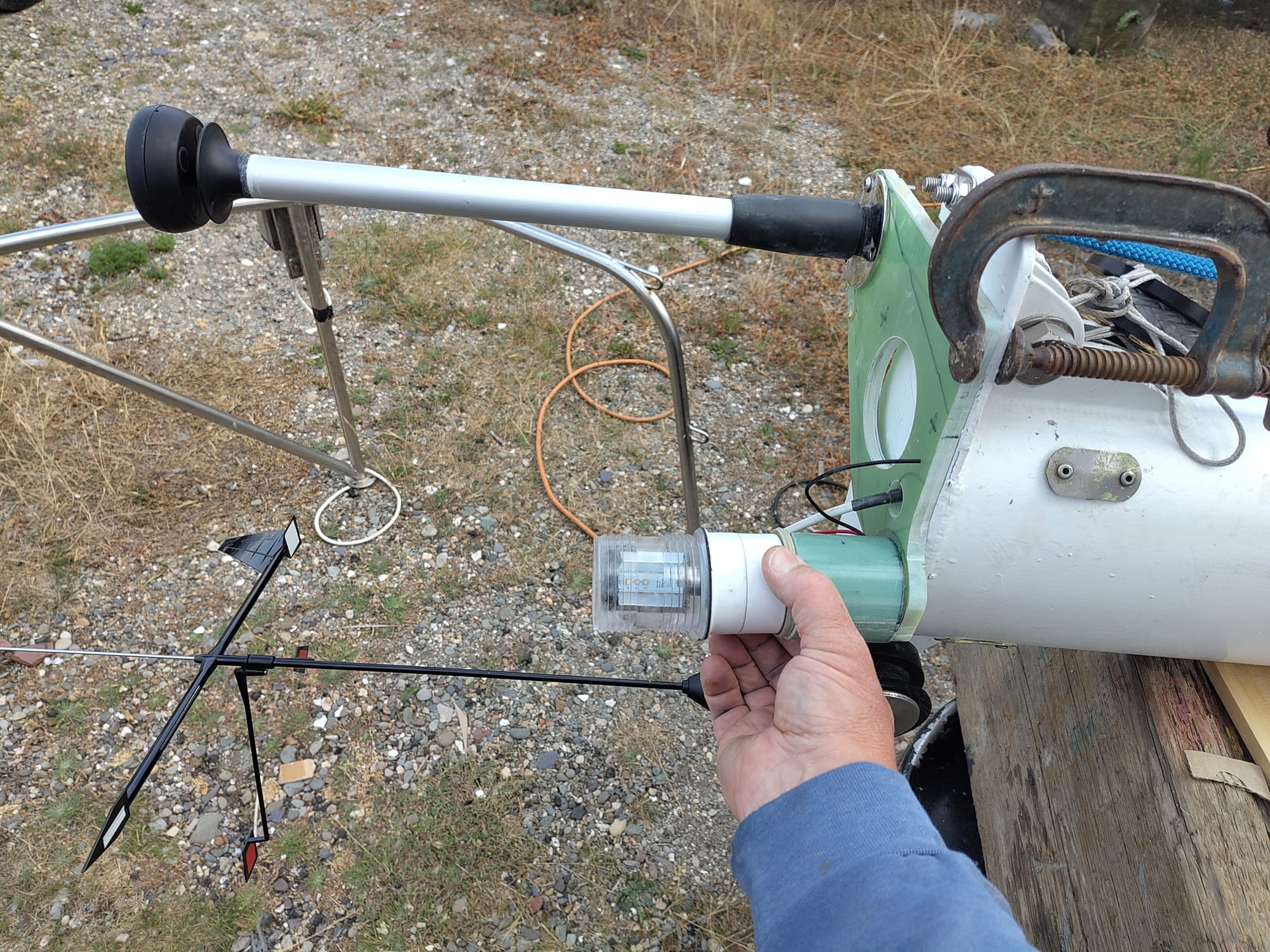
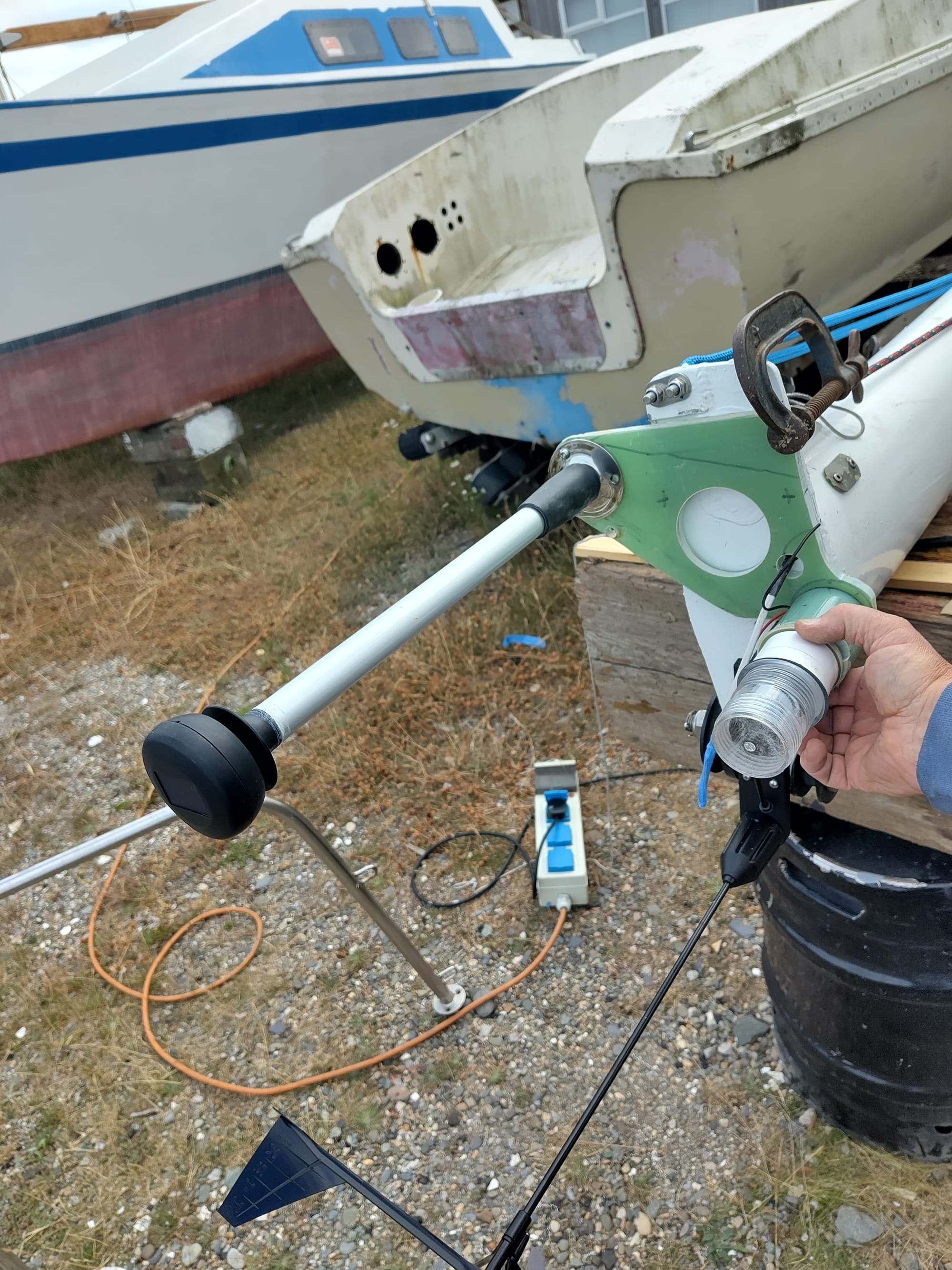
Further down the mast we have a combined steaming light (shows white forwards when motoring) and a deck light.
At the spreaders we have added more deck lights and also a CCTV video camera. See this video for more on the wiring.
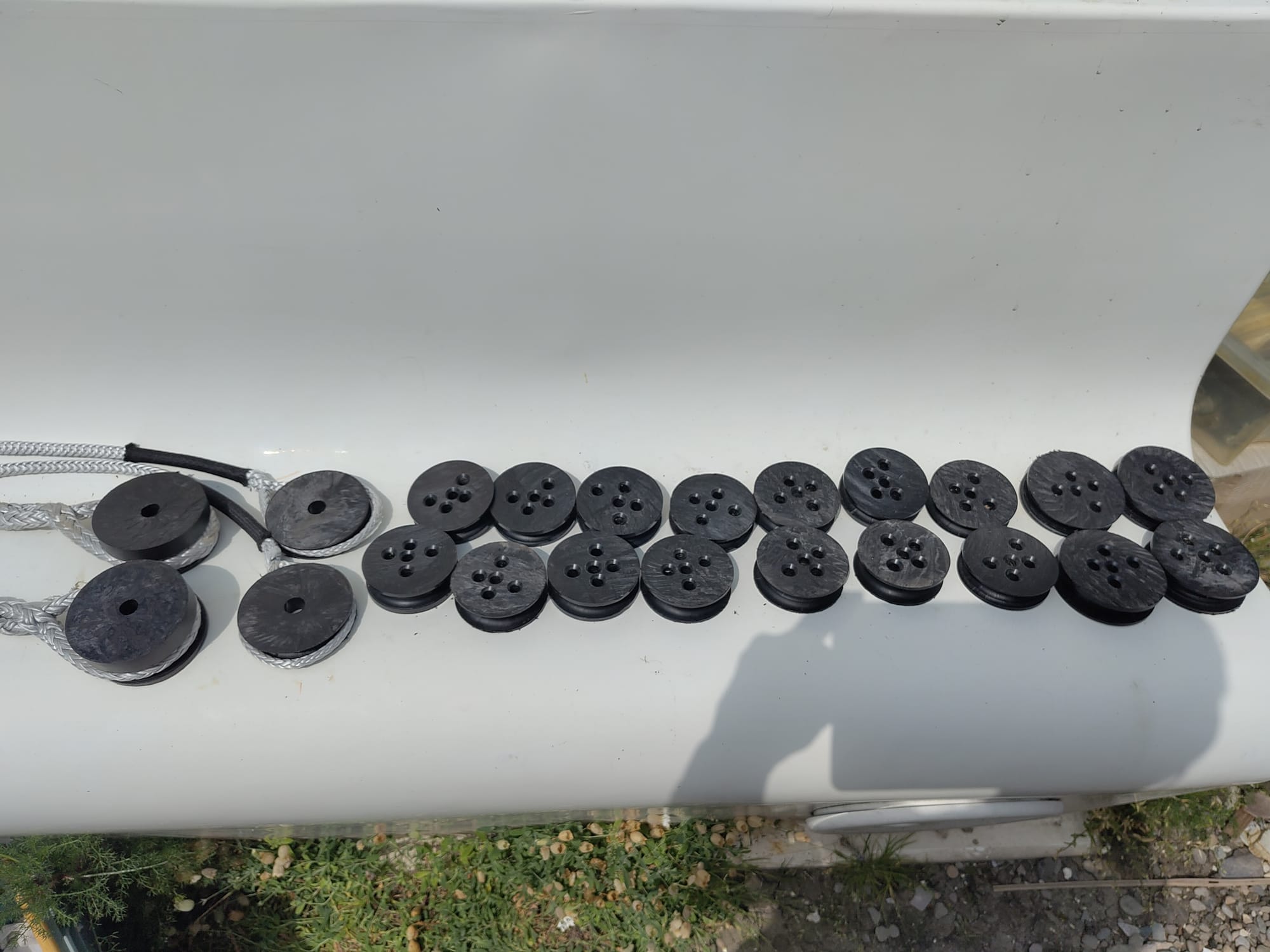
We had to make a whole bunch of Acetal parts to allow us to connect the bottom of the shrouds and stays to the chainplates. I made 18 deadeyes and a number of other specials (see this video for more):
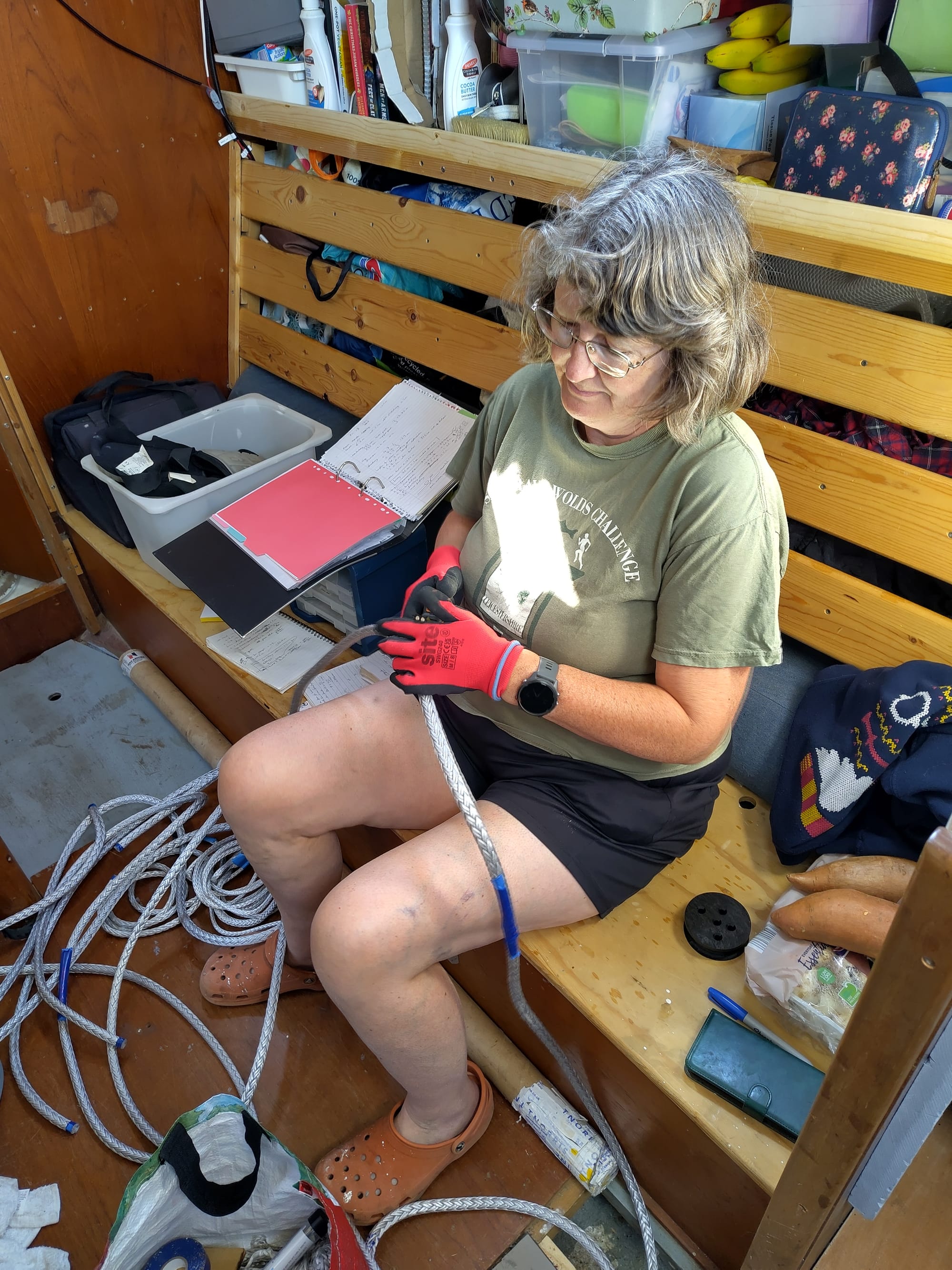
Jane had to make some more lengths of rigging (inner forestays, check stays, chainplate looks and soft shackles). We then needed to stretch all these to tighten them up after the splicing and knotting (see this video for more).
Our big mast raising Video shows all these and more.
In the end the actual mast raising was pretty drama free, we have had some strong winds since and no problems at all.
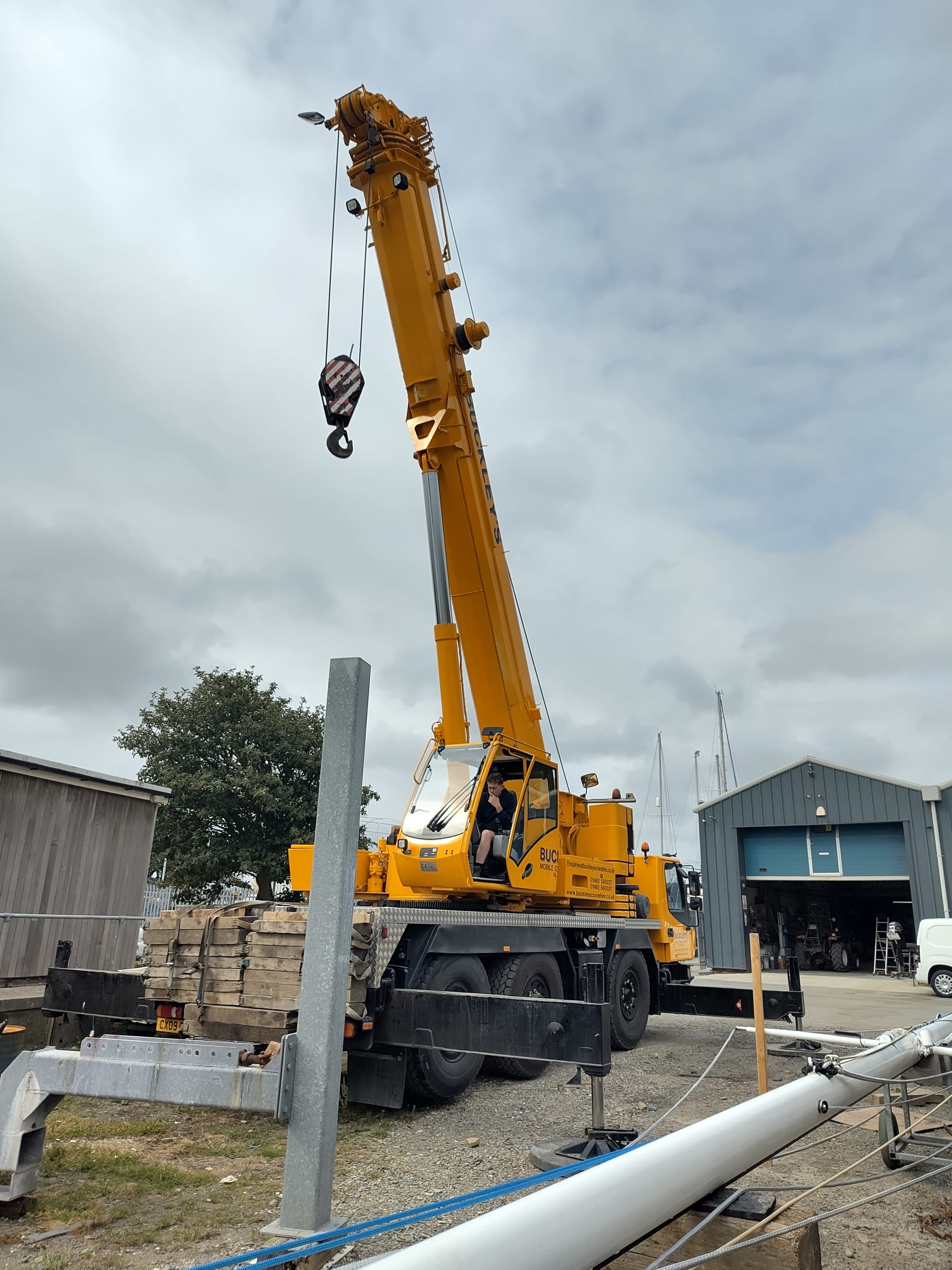
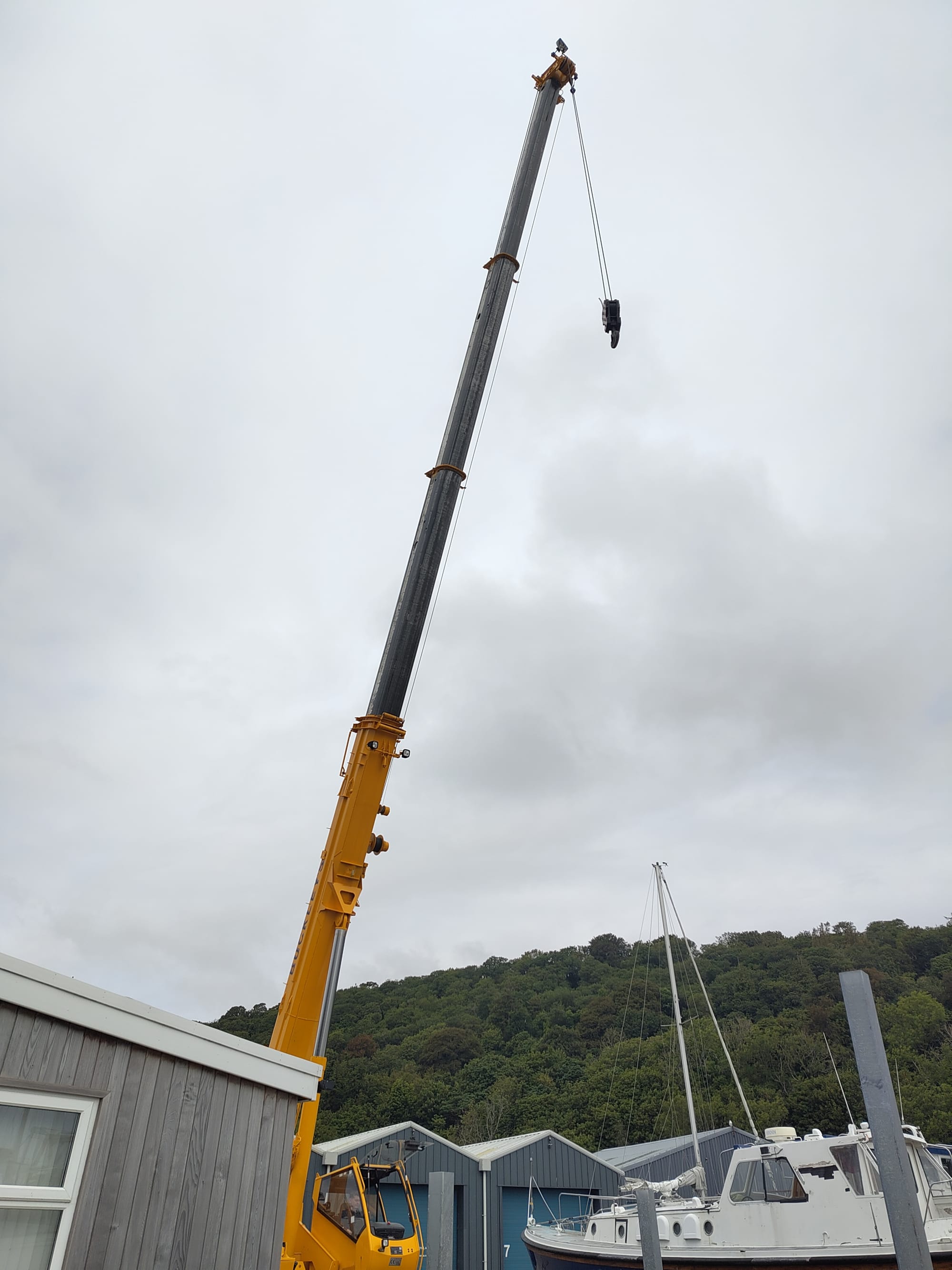
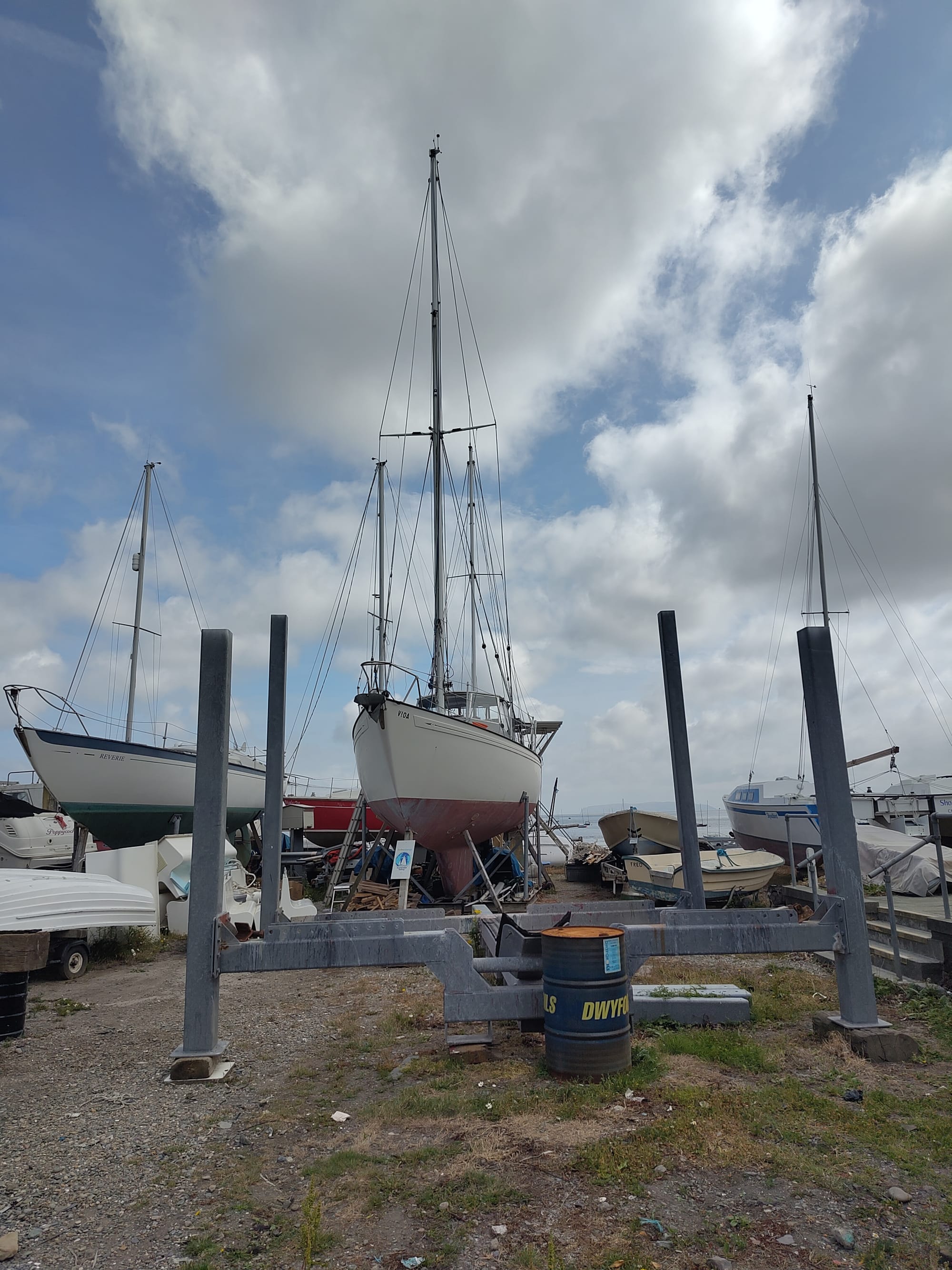
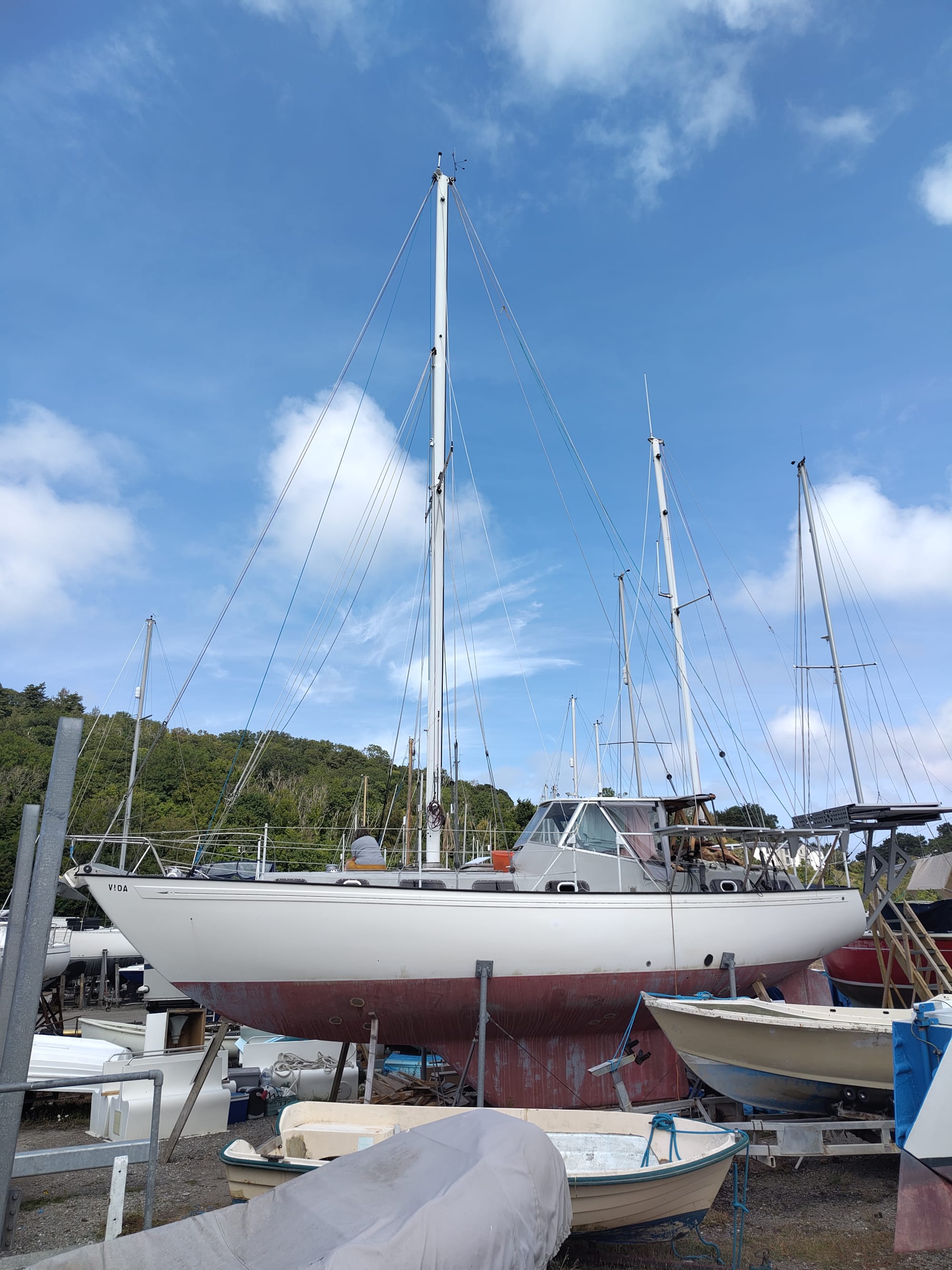
Once we get some dry and calm days we can finish the last tidying up and test fit the sails.
Preparing the bottom of the boat
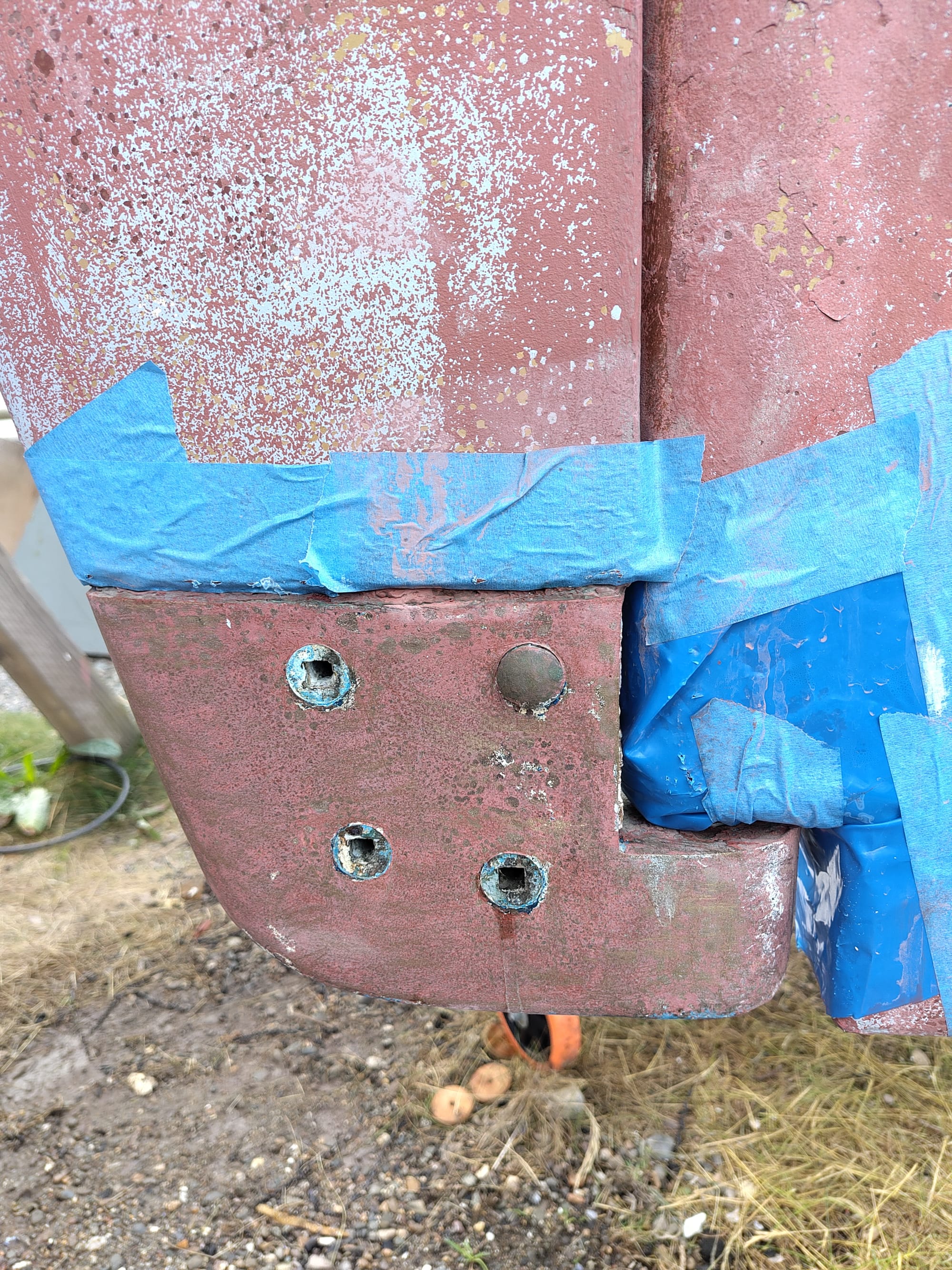
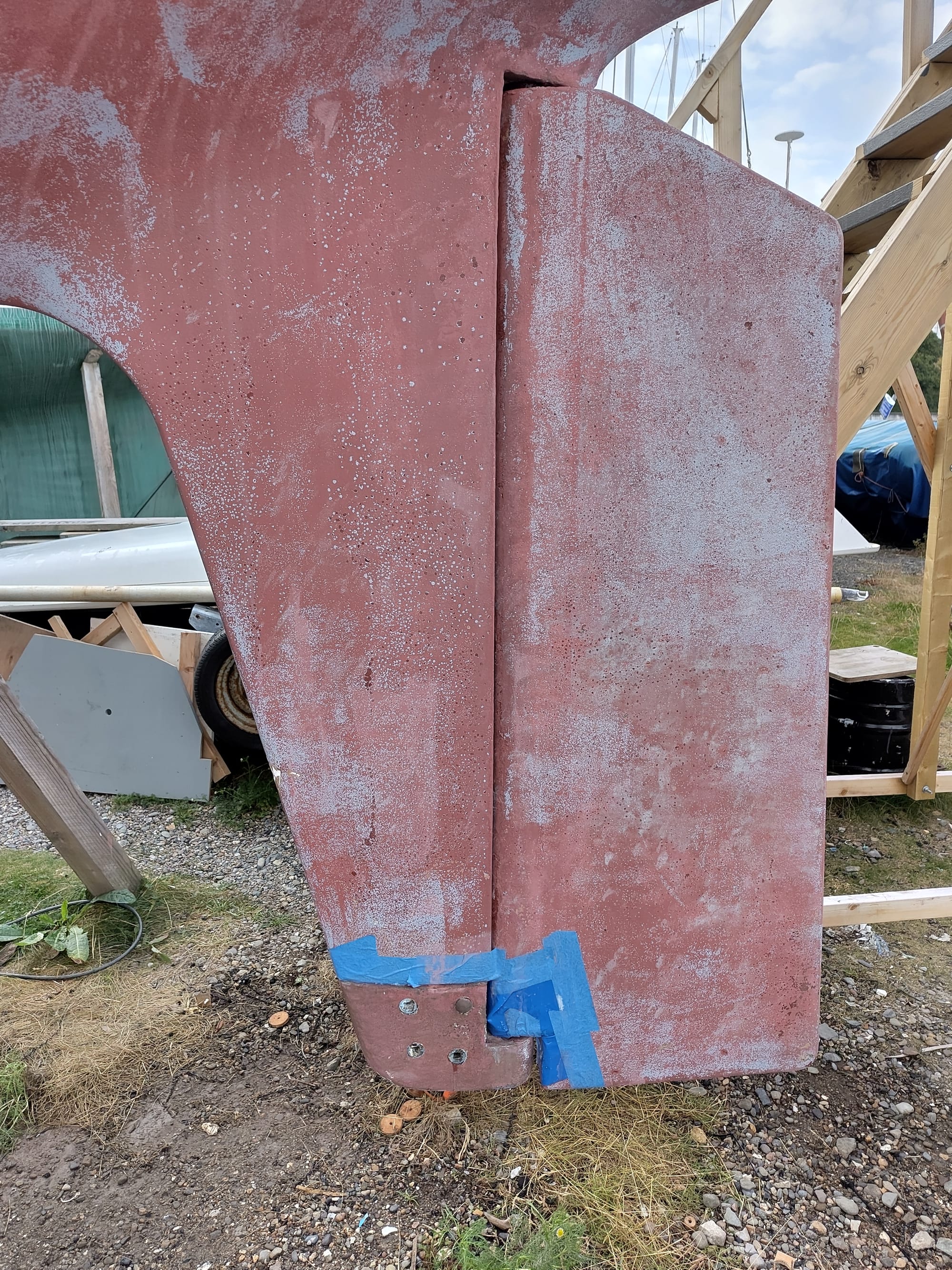
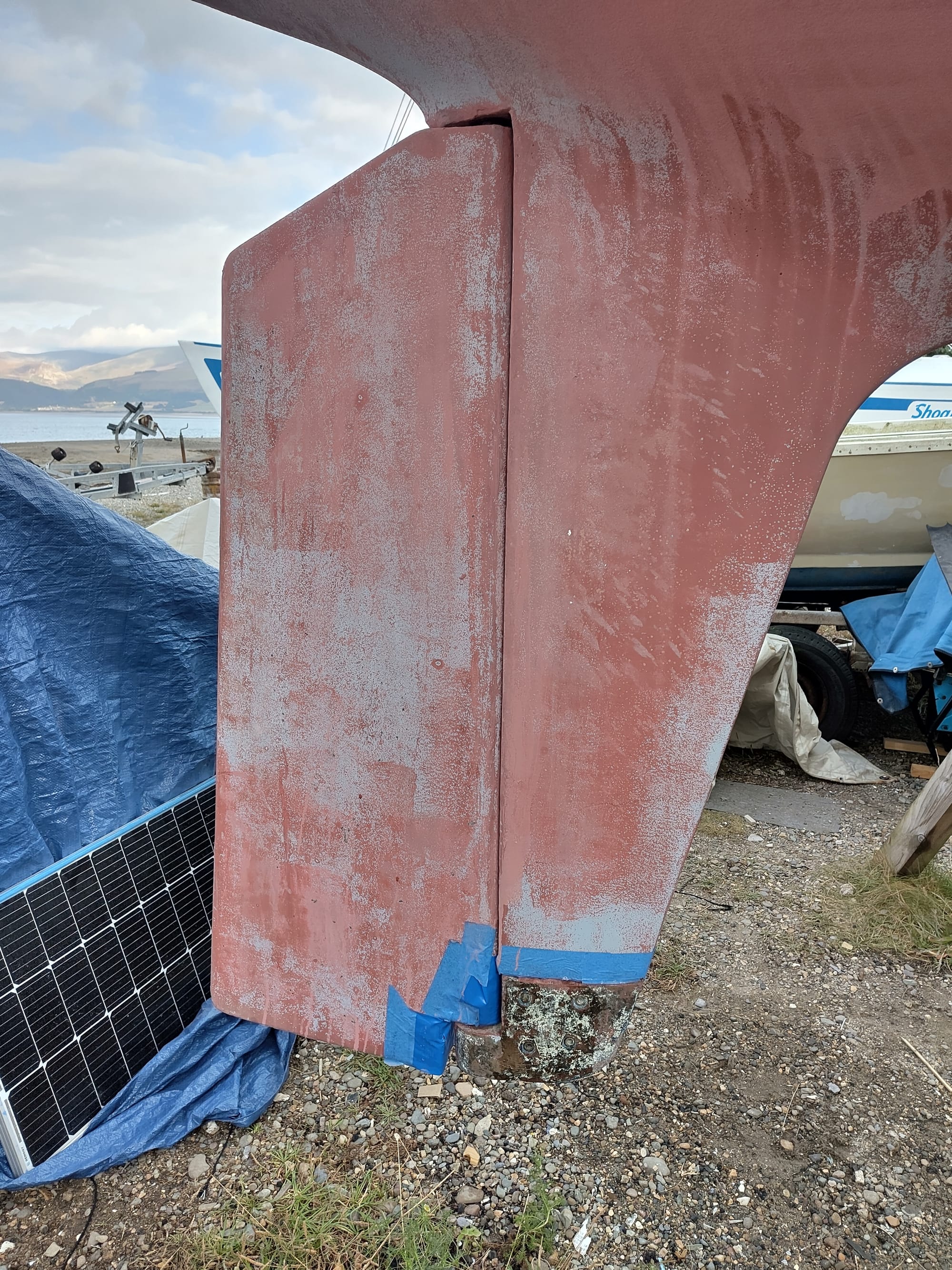
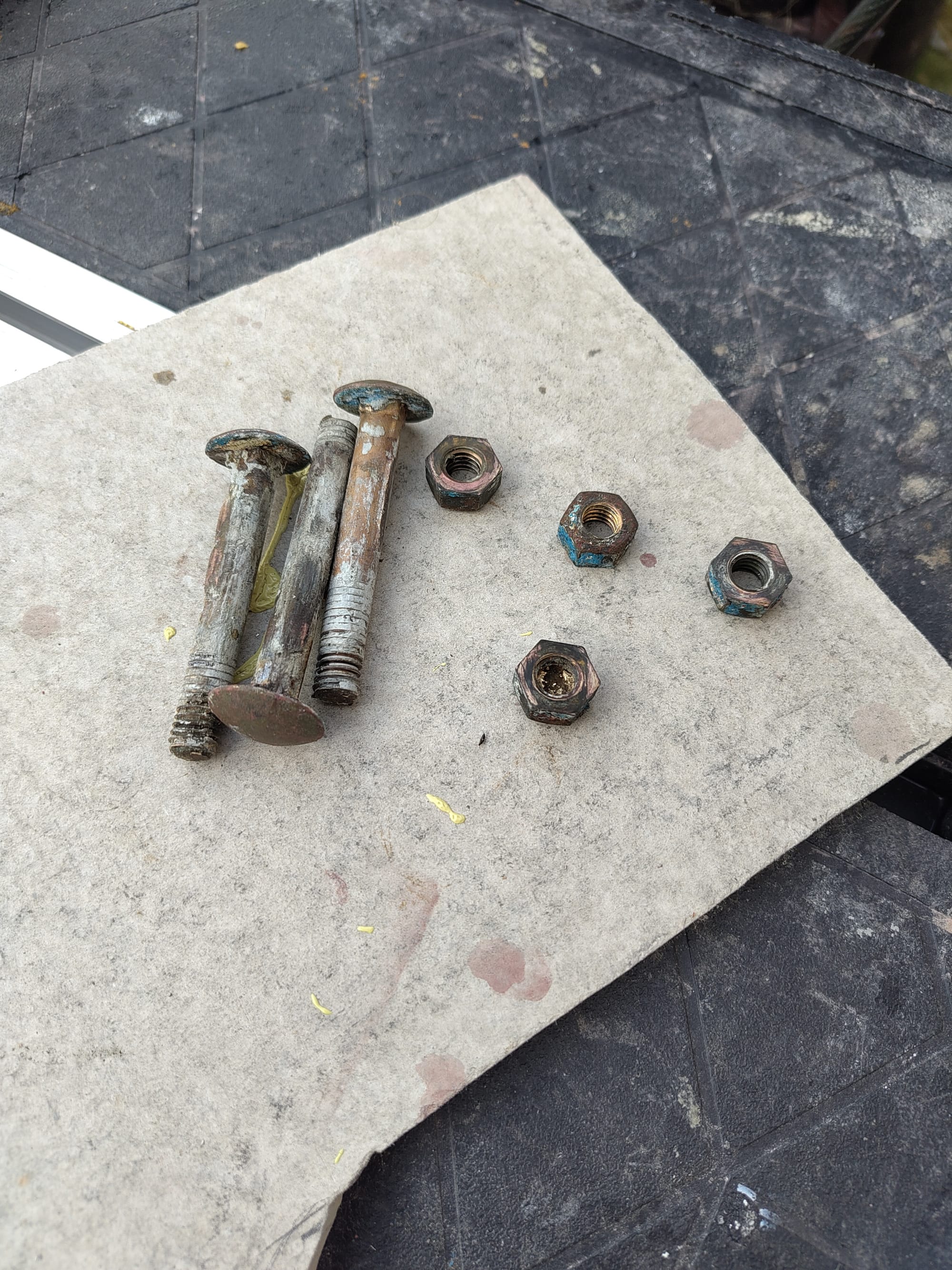
Jane has been busy cleaning off all the grime and loose antifouling from the bottom of the boat. Today we removed the bolts for the Bronze shoe at the bottom of the skeg as we need to replace them.
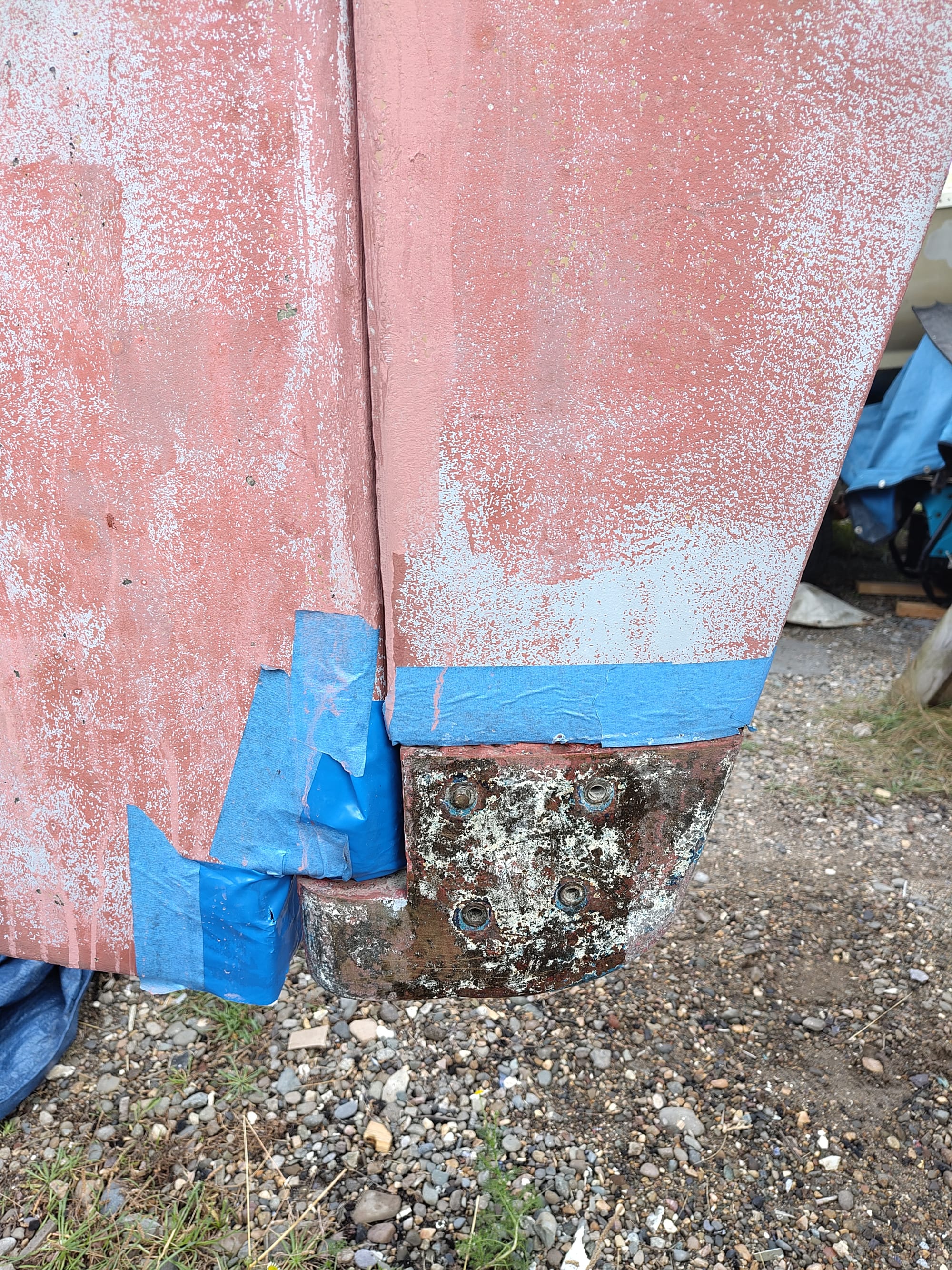
Yet more electrical work
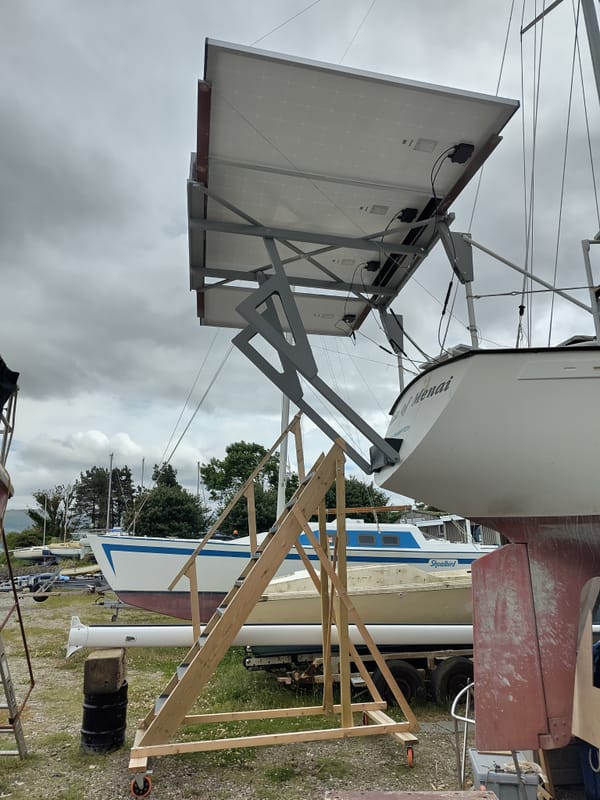
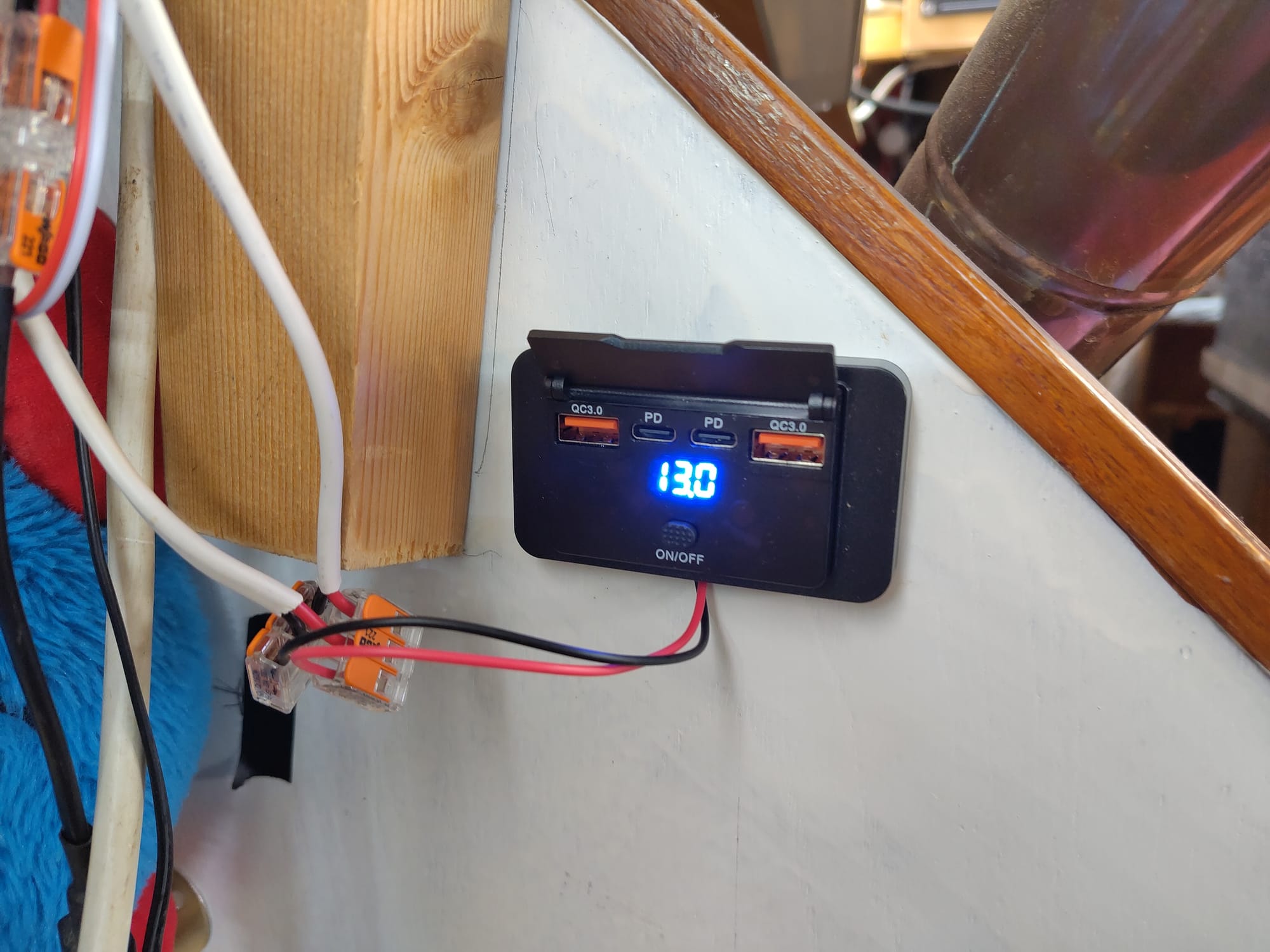
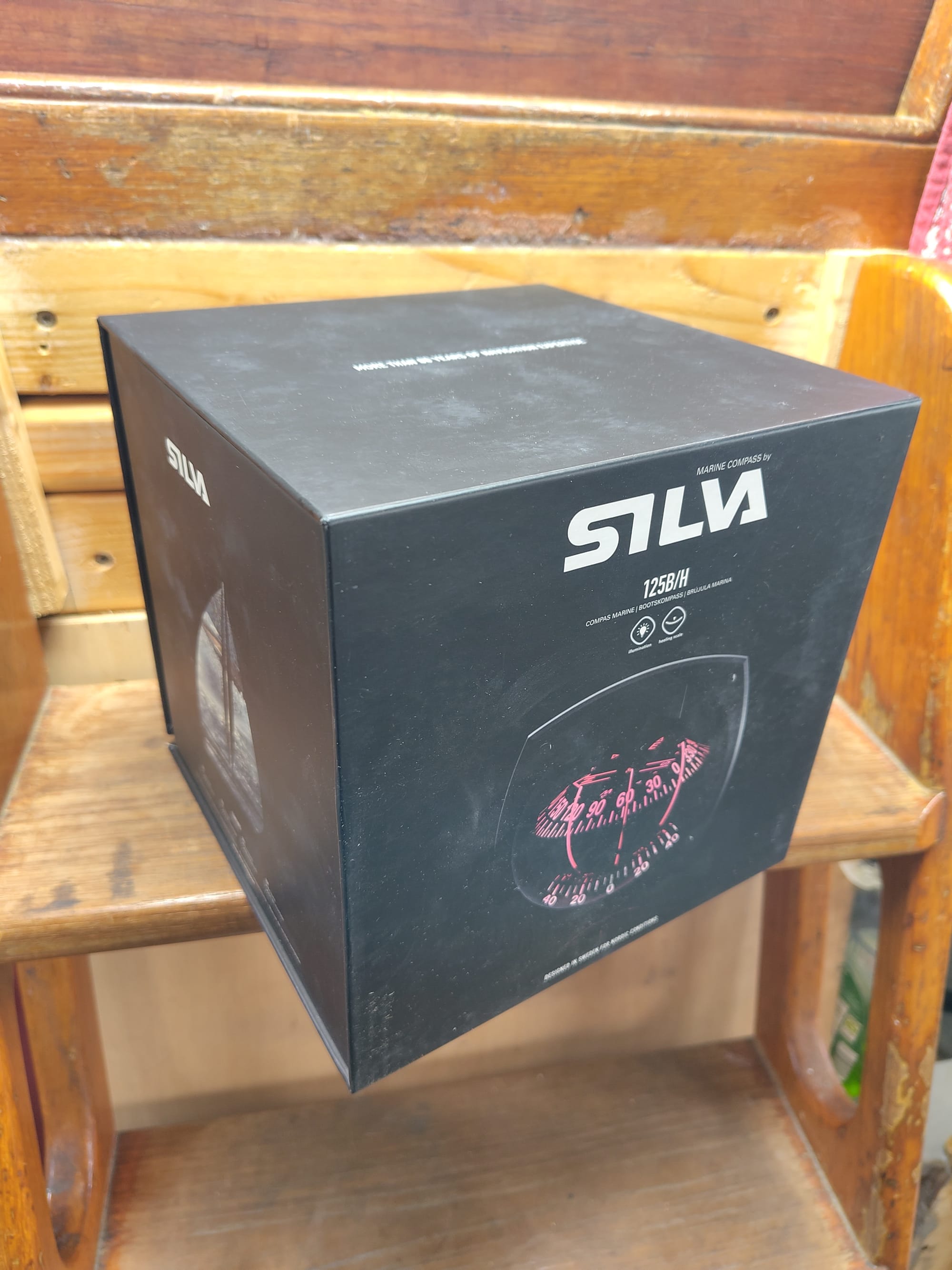
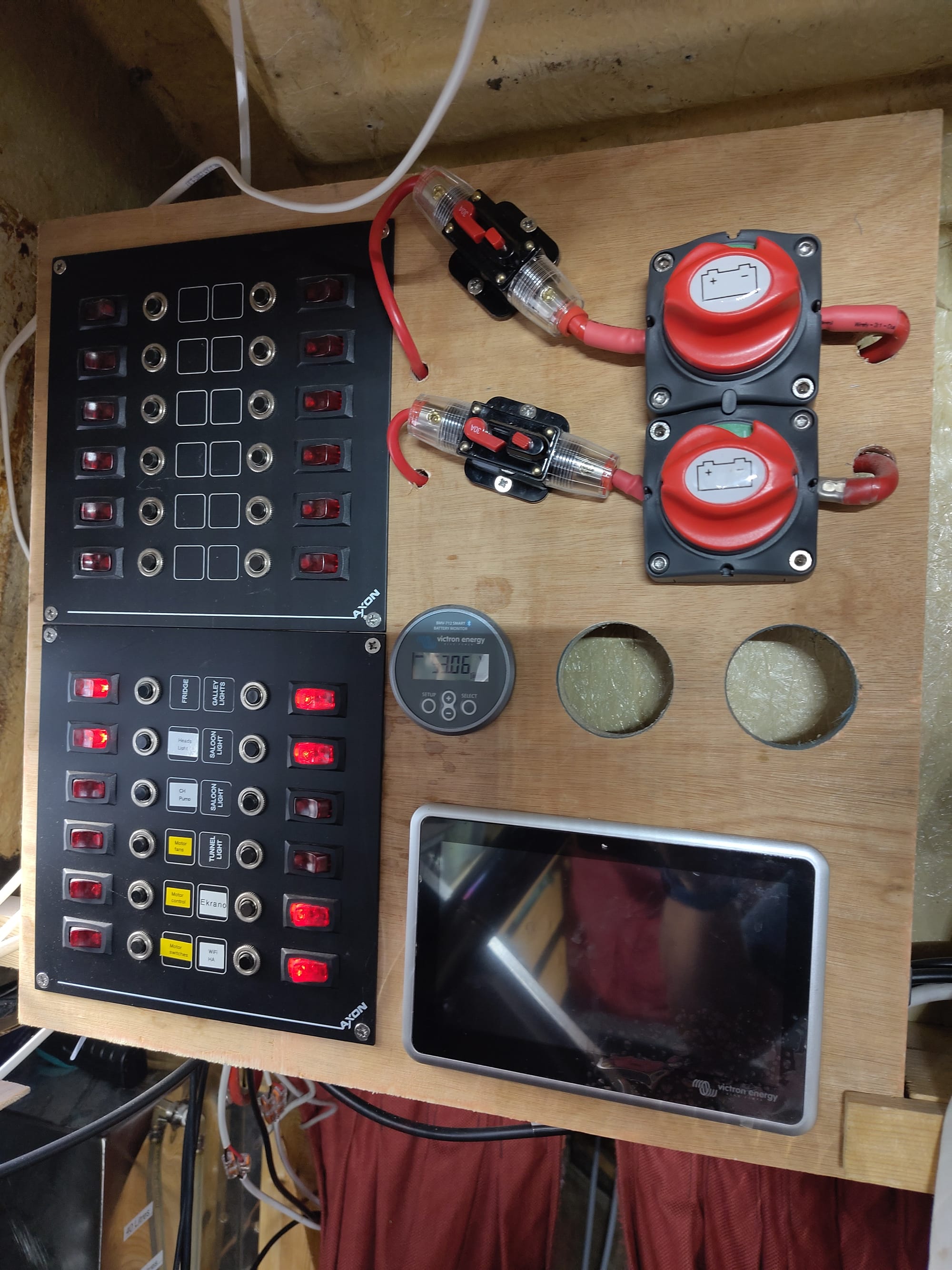
I've been working on the Windlass electrics (boxing in the batteries, adding a better switch, starting on the charging circuit), also preparing to wire in bilge pumps. I have added some more USB sockets (running straight from the 12V house battery which is much more efficient than using the inverter to power a standard mains USB charger). I finally got the extra 12V switch panel wired up. We also have our new compass ready to fit.
Enjoying Family celebrations
We had a long weekend of driving to the south coast and Salisbury (via Nottingham in both directions) for my brothers 60th Celebrations and the Christening of our latest great niece. We had a fantastic time seeing everyone.
The end
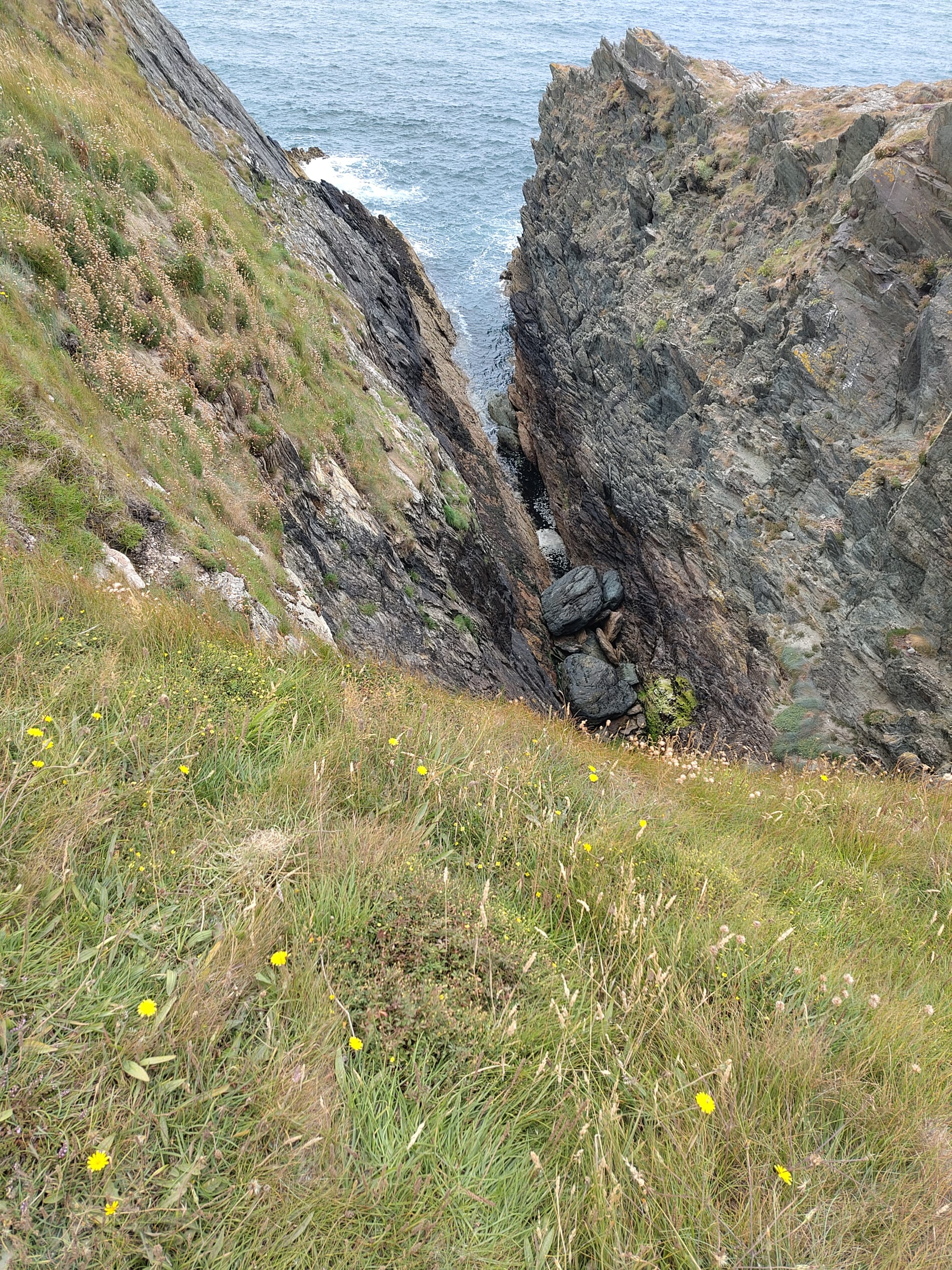
That seems like a very long newsletter, we have also managed one new part of the Anglesey coastal path.
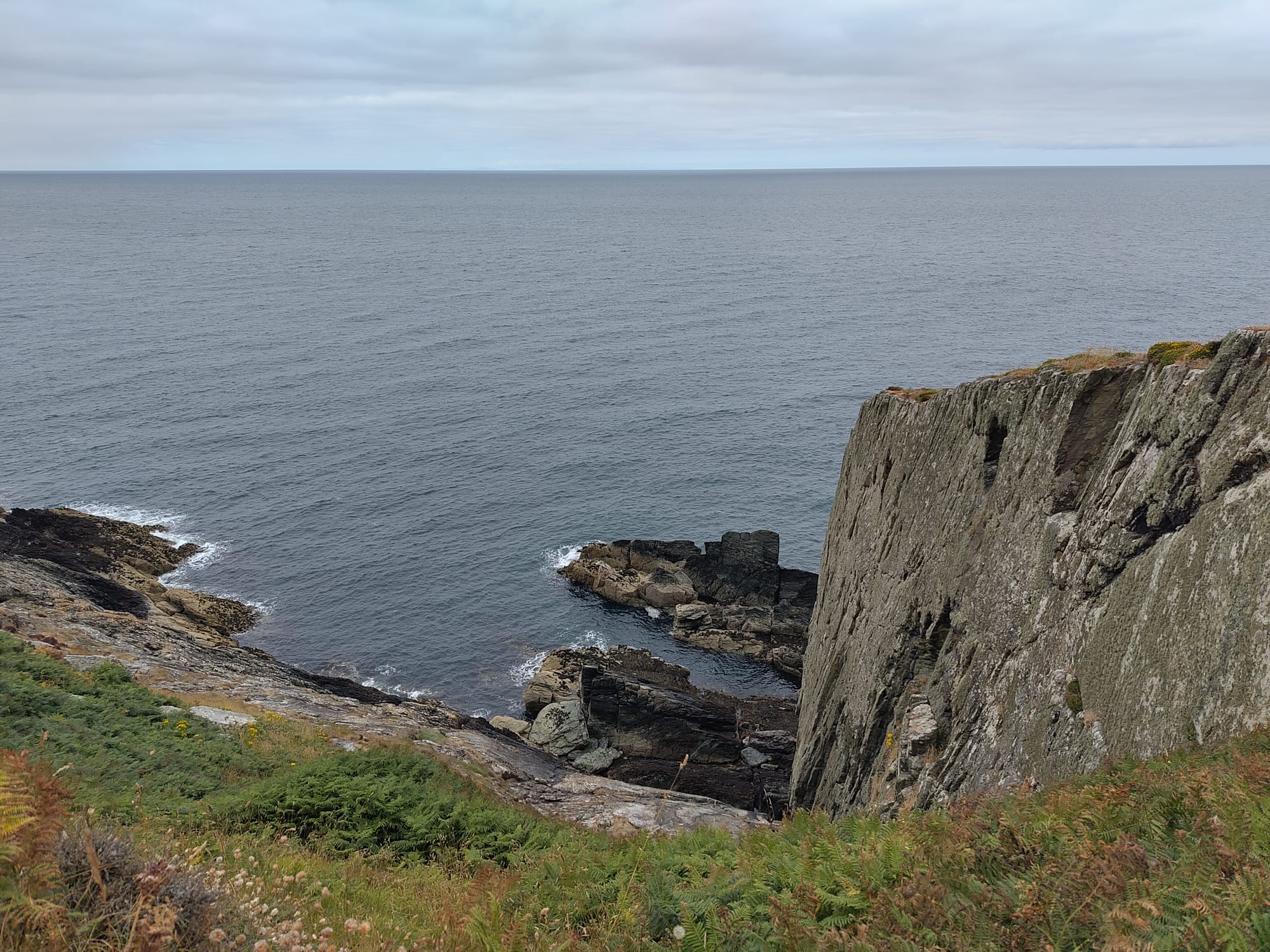
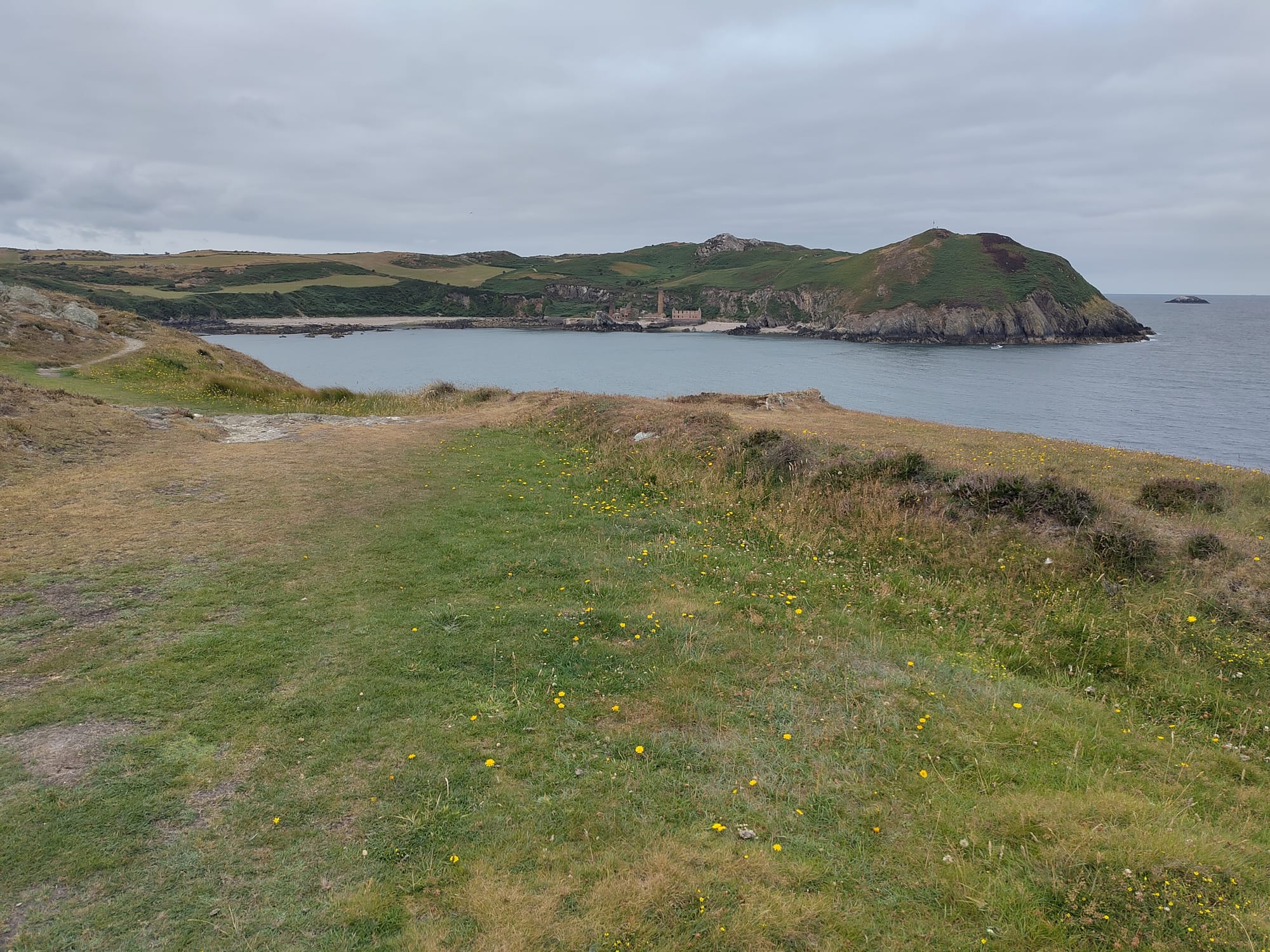
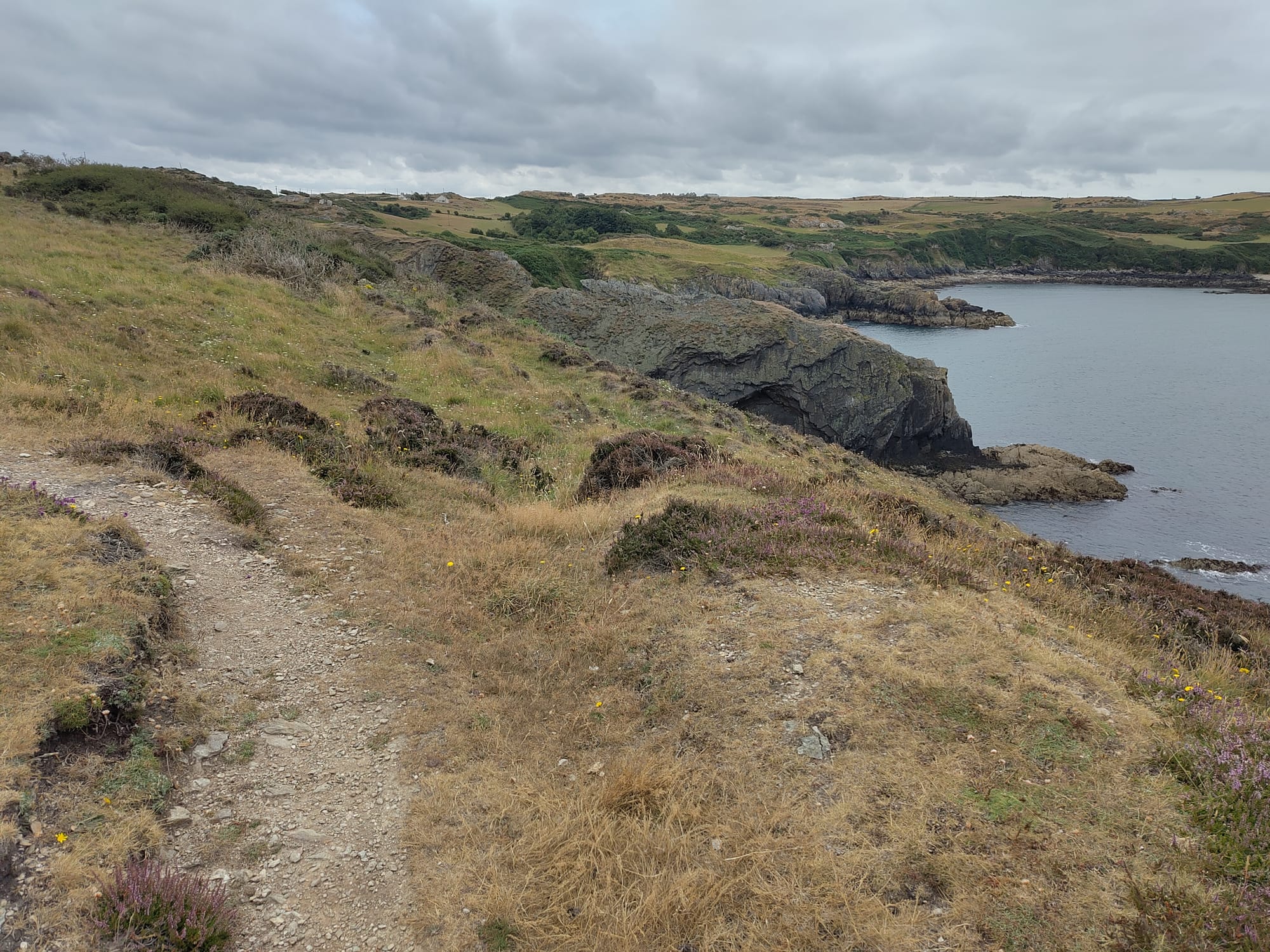
Hopefully not as long before the next update, we are still working towards a launch in late August.
Love
Dave and Jane